Phuket Food Guide: Beyond the Beachfront Restaurants
The worst meal you will eat in Phuket is at a beachfront restaurant in Patong where the menu photographs have sun damage and the pad thai costs 350 baht. The best meal you will eat in Phuket is in a Sino-Portuguese shophouse in the Old Town where the owner's grandmother developed the recipe and the yellow crab curry costs 180 baht.
These two meals exist 25 minutes apart by scooter. Most tourists eat the first one every day and never find the second. This guide is about finding the second one.
Why Phuket Food Is Different
Phuket was a trading port before it was a resort island. Chinese Hokkien settlers arrived centuries ago and planted themselves so thoroughly into the local culture that their food became the island's food. Indian and Malaysian Muslim traders brought roti, biryani, and curry influences. Portuguese and Persian merchants added their own thread to the pattern.
The result is a cuisine that has nothing to do with the standard Thai restaurant menu most visitors encounter at beach resorts. Hokkien mee noodles stir-fried with seafood in a dark soy sauce. Yellow crab curry so rich it turns the rice underneath it gold. Moo hong, the Chinese-style braised pork belly that falls apart under a fork. O-tao, the oyster omelette that Hokkien settlers brought from Fujian province. Kanom jeen, soft rice noodles served with freshly made southern Thai curry poured over the top.
None of these dishes come from a menu that photographs well. All of them taste better than anything on the beachfront strip.
Phuket Town: Start Here Every Time
Old Town as a Food Destination
Phuket Town's Old Town is the most concentrated area of genuinely distinctive food in the entire province. The Sino-Portuguese shophouses on Thalang Road, Dibuk Road, and Phang Nga Road contain restaurants that have been operating for decades, coffee shops that serve traditional Thai-Chinese coffee the way it has been made on this island for generations, and street food stalls that rotate with the morning market rather than a fixed tourist calendar.
Start on Ranong Road in the morning for kanom jeen, rice noodles served with southern Thai curry poured over them at stalls that set up from 6am and sell out by 10am. Continue to Thalang Road for traditional coffee shops serving kopi with condensed milk and dim sum baskets arriving by 8am.
Kopitiam by Wilai
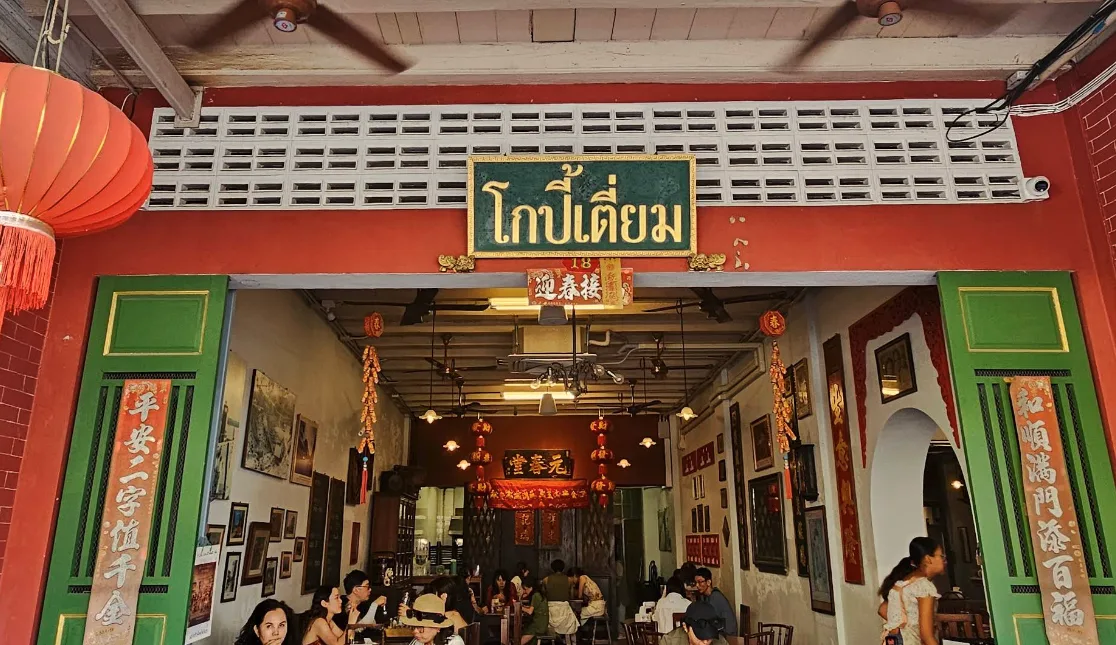
⭐ 4.6/5 · 1,604 reviews · 18 Thanon Talang, Old Town 📍 View on Google Maps ⏰ Tue–Sun 11am–9pm · Closed Monday · 📞 +66 81 895 4278
The quintessential Old Town dining experience. Kopitiam by Wilai occupies a Sino-Portuguese heritage building and serves Thai-Chinese food in the kopitiam tradition, the Chinese-Thai coffee house format that was the social centre of Phuket's immigrant community for generations. The tom yum soup here receives consistent praise across 1,604 reviews as the best version in Phuket. The Thai braised pork with rice, the gai pad krapao, and the homemade fruit sodas all appear regularly in reviewer highlights. Expect a queue at peak lunch hours. The outdoor seating clears faster than the indoor tables.
One Chun Cafe and Restaurant
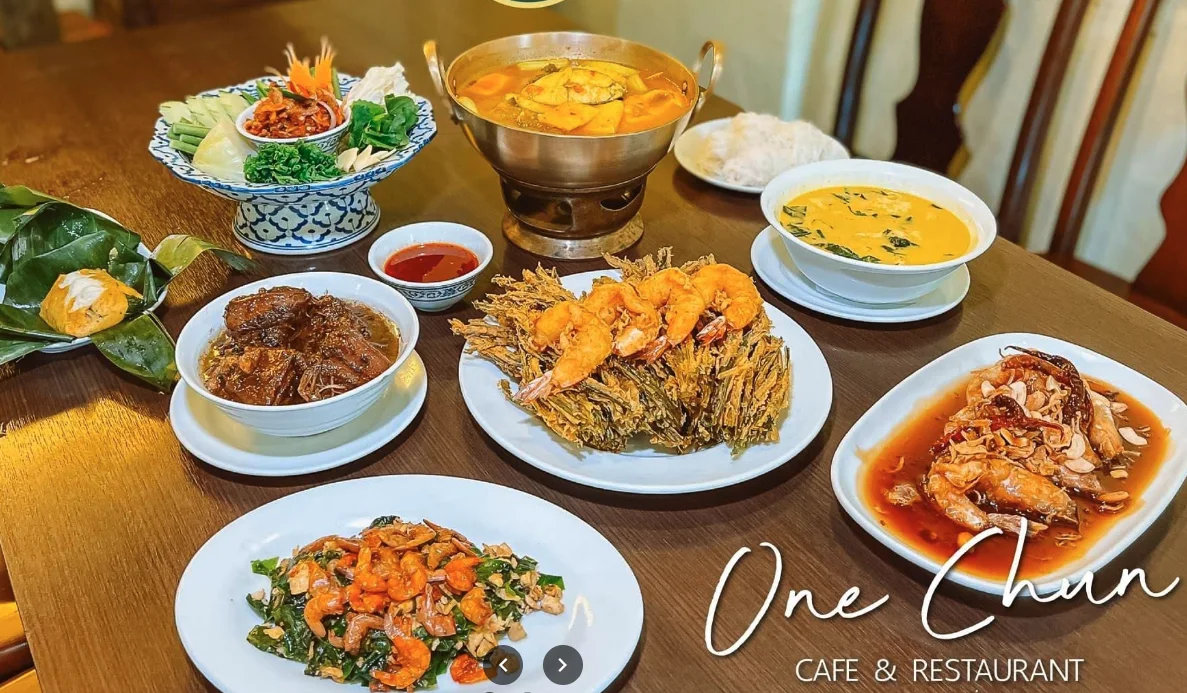
⭐ 4.4/5 · 6,486 reviews · 48/1 Thep Krasattri Rd, Old Town 📍 View on Google Maps ⏰ Daily 10am–10pm · 📞 +66 76 355 909
The most-reviewed restaurant in Phuket at 6,486 ratings and a Michelin Bib Gourmand recipient for multiple consecutive years. The yellow curry with fresh crab meat served over noodles is the signature dish and the reason most first-timers visit. The fried pork and pork stew are called out equally across reviews as exceptional. Expect a 30 to 40-minute wait at peak hours. Arrive before noon or after 2pm to reduce the queue. The food repays the wait.
Raya Restaurant
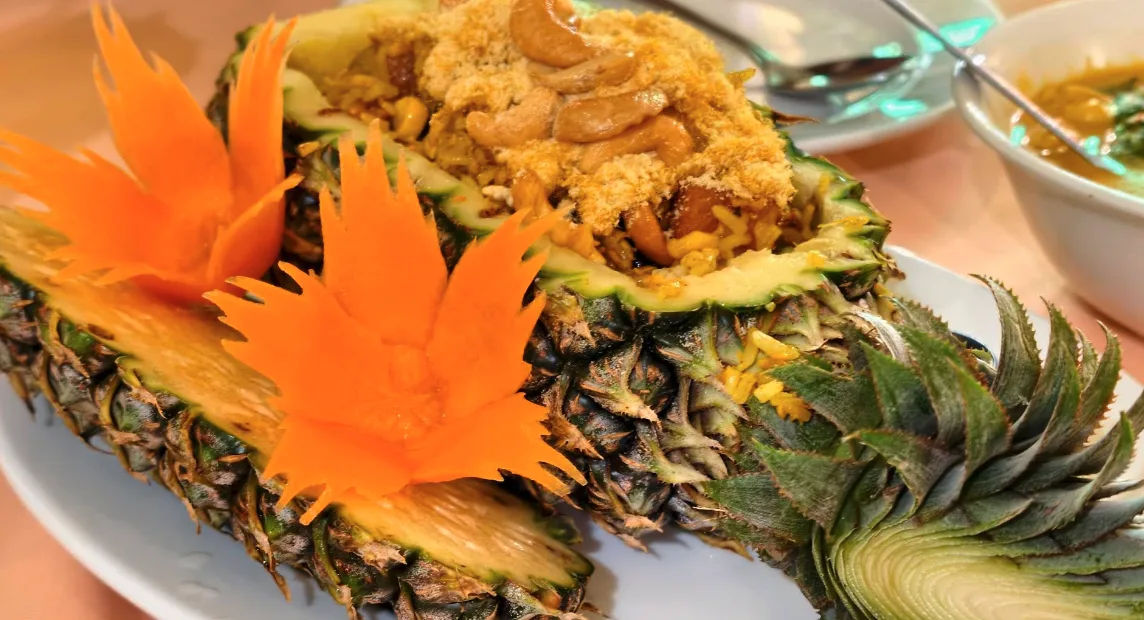
⭐ 4.4/5 · 3,352 reviews · 48/1 Thanon Dibuk, Old Town 📍 View on Google Maps ⏰ Daily 10:30am–10pm · 📞 +66 76 218 155
A long-established Southern Thai restaurant in a two-storey wooden heritage building with high ceilings and exposed beams. The crab omelette and crab Thai curry are consistently described as the best in Phuket across 3,352 reviews. The kua kling neua (very spicy dry beef curry), gaeng som (sour curry), and pad sam men also appear frequently as must-orders. No air conditioning so dress accordingly. The bold, authentically southern Thai flavours more than compensate.
The Sunday Walking Street
The Old Town Sunday Walking Street runs along Thalang Road every Sunday evening from around 4pm to 10pm. Food vendors outnumber the craft and clothing stalls. The kanom krok coconut pancakes cooked in iron moulds, the roti stuffed with banana and condensed milk, the fresh-squeezed sugarcane juice, and the Phuket-style satay with yellow turmeric marinade are the right things to order while walking rather than sitting. Arrive before 6pm for the best selection before the most popular stalls sell out.
Patong: Two Markets Worth Knowing
Malin Plaza
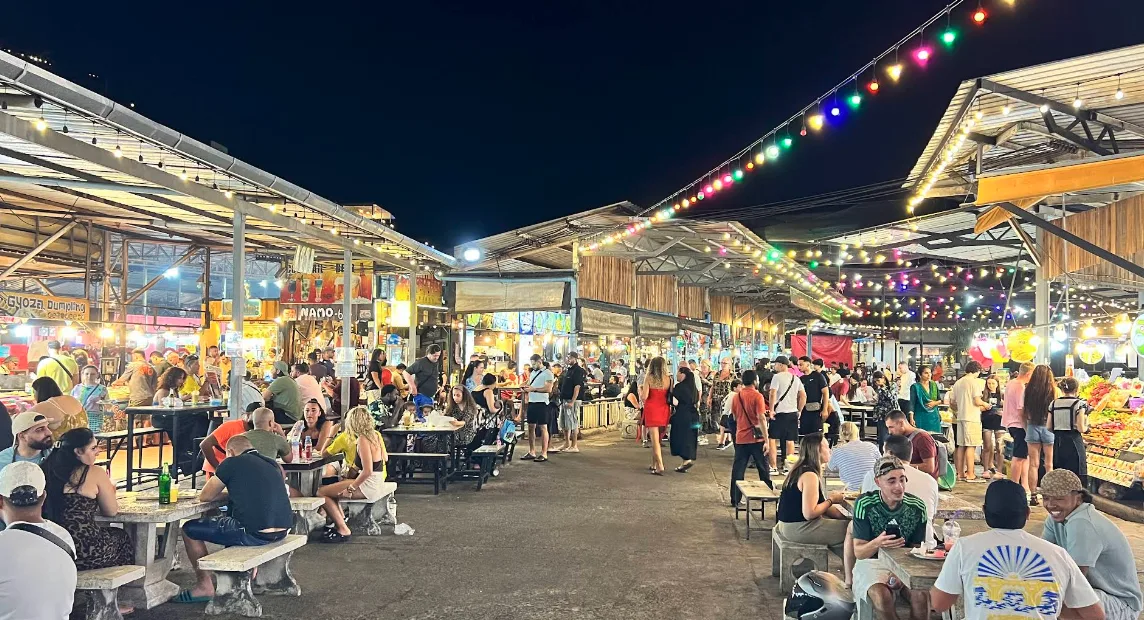
⭐ 4.4/5 · 8,737 reviews · 162/51-52 Thanon Prachanukhro, Patong 📍 View on Google Maps ⏰ Daily 11am–midnight · 📞 +66 93 323 0333
Malin Plaza is the most accessible evening food market in Patong and delivers the best value of any eating option in the tourist belt. Grilled prawns, tuna, pad thai, tom yum goong, mango sticky rice, and Thai pancakes all priced under 200 baht per plate. The food is significantly fresher and more honestly priced than the beachfront restaurants 500 metres away. The market runs from late afternoon and peaks around 7 to 9pm. Reviewers consistently mention the grilled meats and the juices as the standout choices.
Banzaan Fresh Market
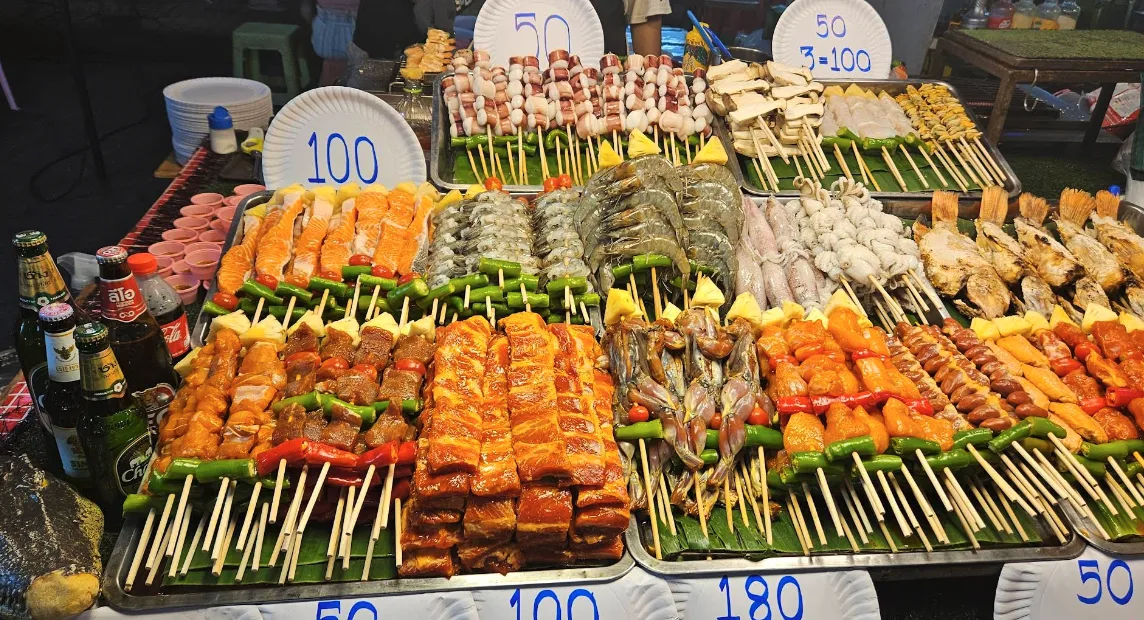
⭐ 4.3/5 · 15,093 reviews · 74/51 Nanai Rd, Patong 📍 View on Google Maps ⏰ Daily 6am–midnight · 📞 +66 61 398 8265
The most-reviewed food venue in Phuket at 15,093 ratings. Banzaan operates on two levels. The ground floor is a wet market where you select your own live seafood from the tanks and displays, including lobster, prawns, crab, scallops, fish, and clams. You carry your selection upstairs to the food court where the stalls cook it to order. Negotiate lightly on the seafood prices downstairs, particularly on lobster. The cooking upstairs is straightforward and excellent. Budget 500 to 1,500 baht per person depending on what you select. Every regular Phuket visitor who knows the island has eaten here at least once.
Rawai: The Seafood Market Experience
Rawai Seafood Market in the south sits at the longtail boat pier and runs every morning with the freshest catch from the previous night's fishing. The format mirrors Banzaan but at local rather than tourist prices and without the enclosed market structure. Select your fish, crab, or shellfish from the vendors along the pier road, negotiate the price, and take it to one of the seafood restaurants directly behind the market to have it cooked. Grilled fish costs 200 to 400 baht per kilogram depending on species. Steamed clams with lemongrass run 120 to 180 baht. A full table-sharing seafood lunch for two with rice and vegetables runs 400 to 700 baht at local prices.
This is where the Rawai expat community eats seafood three times a week and where the gap between tourist-area prices and local-area prices becomes most visible.
The Dishes to Order
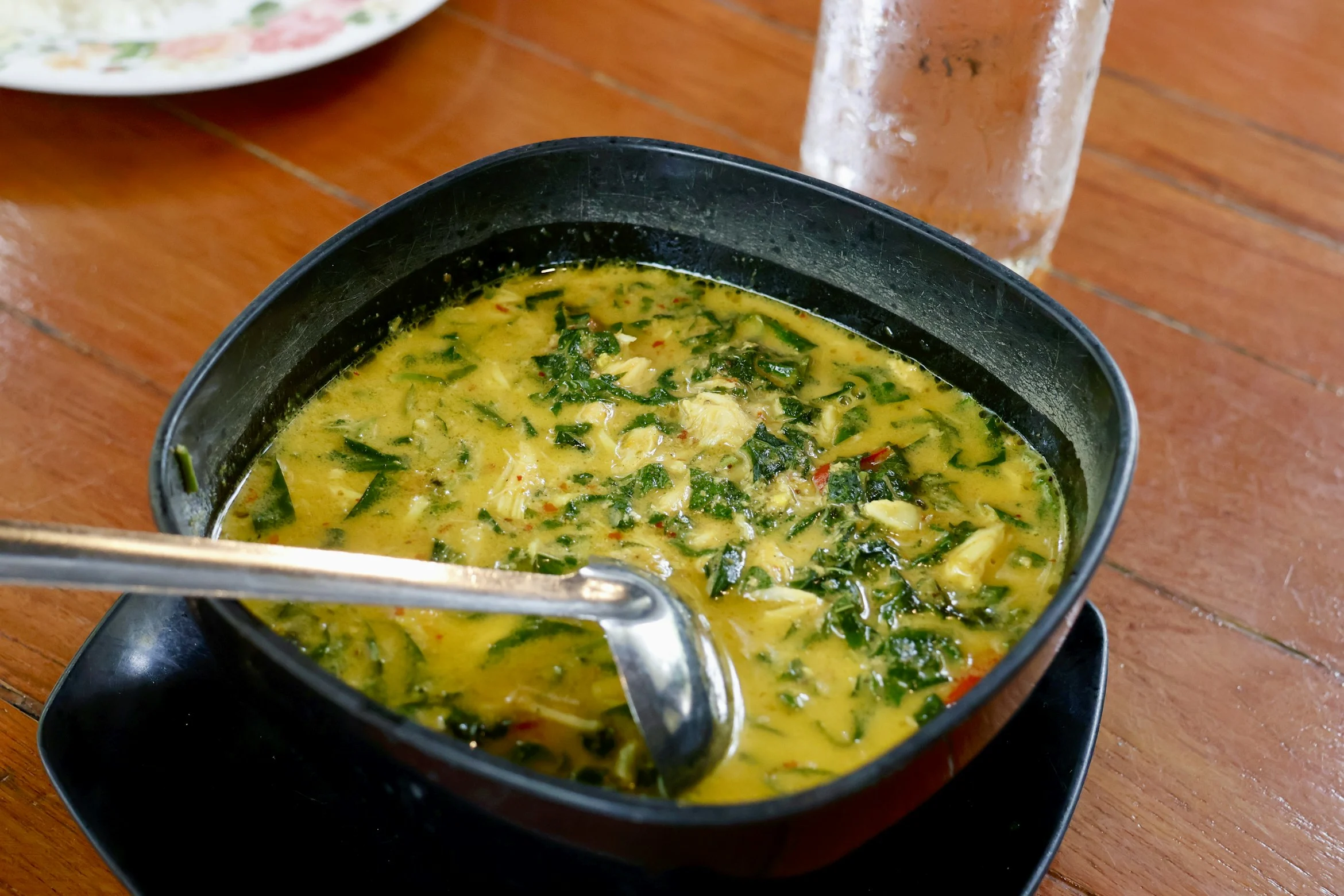
Yellow crab curry (gaeng poo): The signature dish of Phuket. Rich yellow curry with whole crab, fragrant with turmeric and coconut milk. Order it at One Chun or Raya and eat it over rice or noodles. It costs 180 to 250 baht at Old Town restaurants and significantly more at beachfront venues for an objectively worse version.
Moo hong (braised pork belly): Chinese-Phuket heritage dish slow-cooked in soy, five spice, and palm sugar until the fat renders completely. Available at Kopitiam by Wilai and most Old Town restaurants. 120 to 180 baht per serving.
Hokkien mee: Flat egg noodles stir-fried with seafood, pork, and dark soy sauce in the Fujian Chinese tradition. A dish brought to Phuket by the Hokkien settlers and absorbed so completely into the local food culture that it now reads as distinctly Phuket.
Kanom jeen: Fresh rice noodles served at room temperature with hot curry poured over the top. Available at morning market stalls from 6am. The southern Thai fish curry version is the most traditional. 40 to 60 baht per bowl.
O-tao (oyster omelette): Hokkien-origin dish of fresh oysters cooked into a crispy batter with egg and bean sprouts, served with a sweet chilli sauce. Best at the Old Town street stalls and at Banzaan's food court upstairs.
Roti: Malaysian-influenced flatbread cooked to order on a flat griddle. The banana and condensed milk version is the street food version. The roti with chicken curry served for breakfast at the Muslim stalls near Patong is the more serious version. 30 to 60 baht.
Budget Guide
Setting | Price range |
|---|---|
Morning market stalls (Old Town) | 40–80 baht per dish |
Old Town local restaurants | 100–200 baht per dish |
Malin Plaza / Banzaan food court | 80–200 baht per plate |
Rawai seafood market | 200–400 baht per kg of fish |
Mid-range Old Town restaurants | 150–300 baht per dish |
Beachfront tourist restaurants (Patong, Kata) | 300–600 baht per dish |
The practical strategy: eat breakfast and lunch in Phuket Town or at local markets, use the money saved for one properly cooked seafood dinner either at Rawai or Banzaan.
Where to Go from Here
For where to stay while eating your way around the island: Best Hotels in Phuket 2026.
For the beach to walk off lunch on: Best Beaches in Phuket 2026.
For full costs of living and dining in Phuket: Cost of Living in Phuket 2026.
For the full Phuket destination overview: Phuket Travel Guide 2026.