Getting around Thailand costs almost nothing if you make the right choice for each city. The mistake most people make is applying Bangkok logic to Chiang Mai or island logic to Bangkok. This guide covers real monthly transport costs city by city, with honest figures for every option from a BTS monthly pass to full car ownership.
Bangkok: BTS and MRT
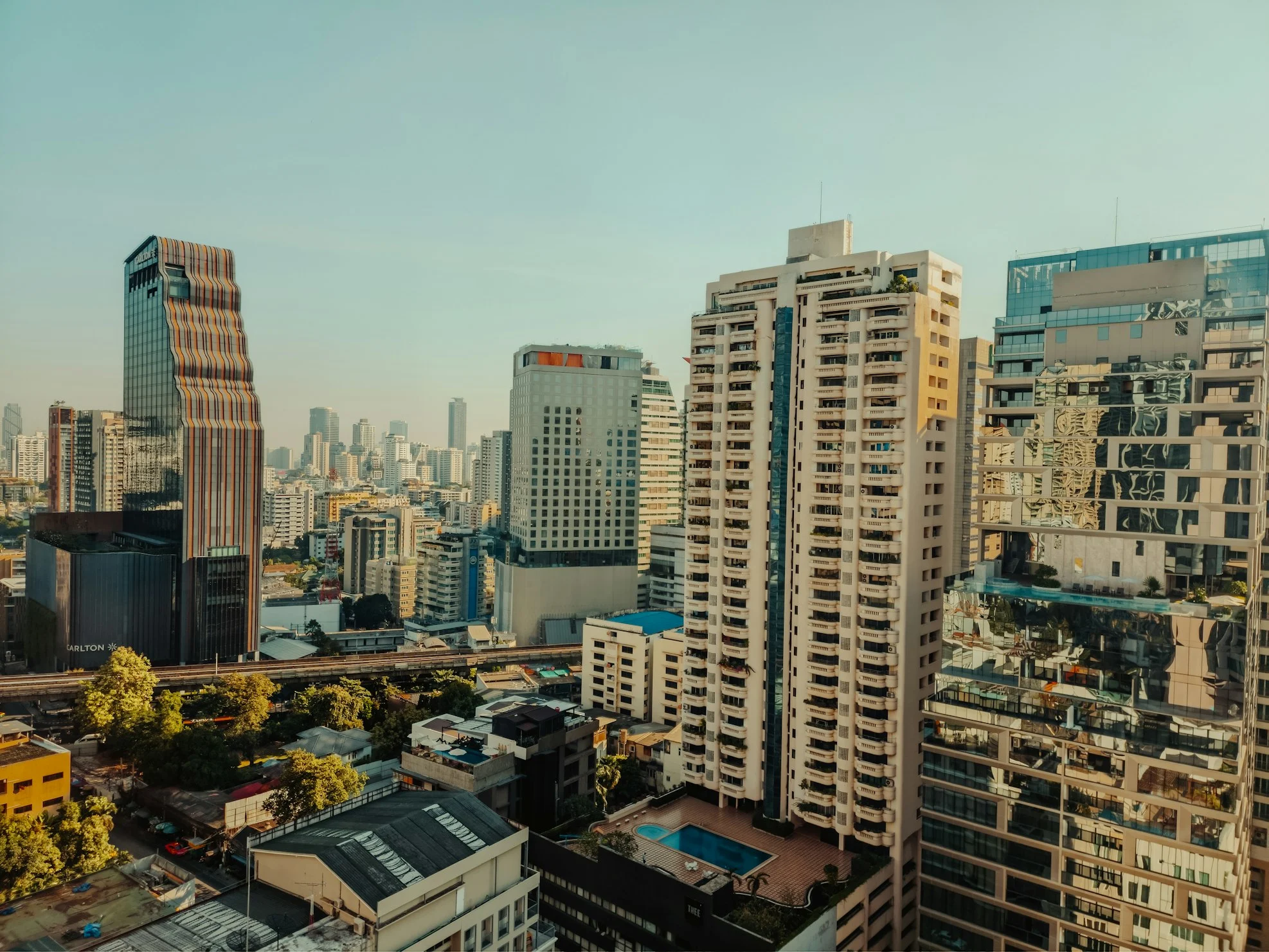
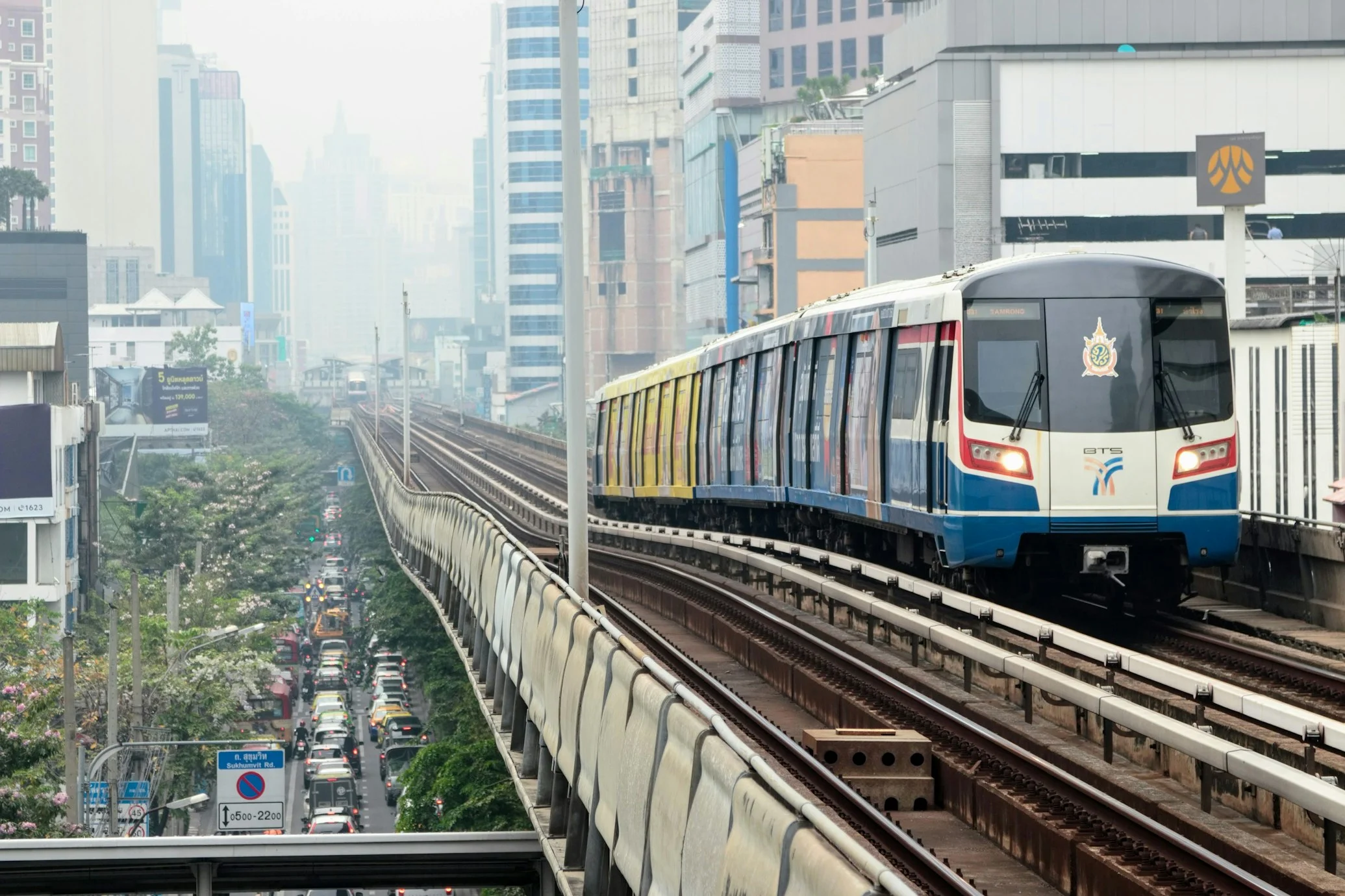
Bangkok's sky train (BTS) and underground (MRT) cover the central city and are the most practical daily transport for anyone living near a station. A single trip costs 17 to 59 baht depending on distance. The Rabbit Card monthly pass costs 1,350 baht for unlimited BTS rides within a zone. For people whose daily routes stay within a BTS zone, this is a strong deal.
The MRT has its own card and pricing structure. A combined pass covering both systems is not yet widely available, but single-trip purchases on both using a Rabbit Card are possible. The BTS system is extensive enough that most Bangkok expat areas (Sukhumvit, Silom, Ari) are covered without needing additional transport.
Bangkok: Grab and Taxis
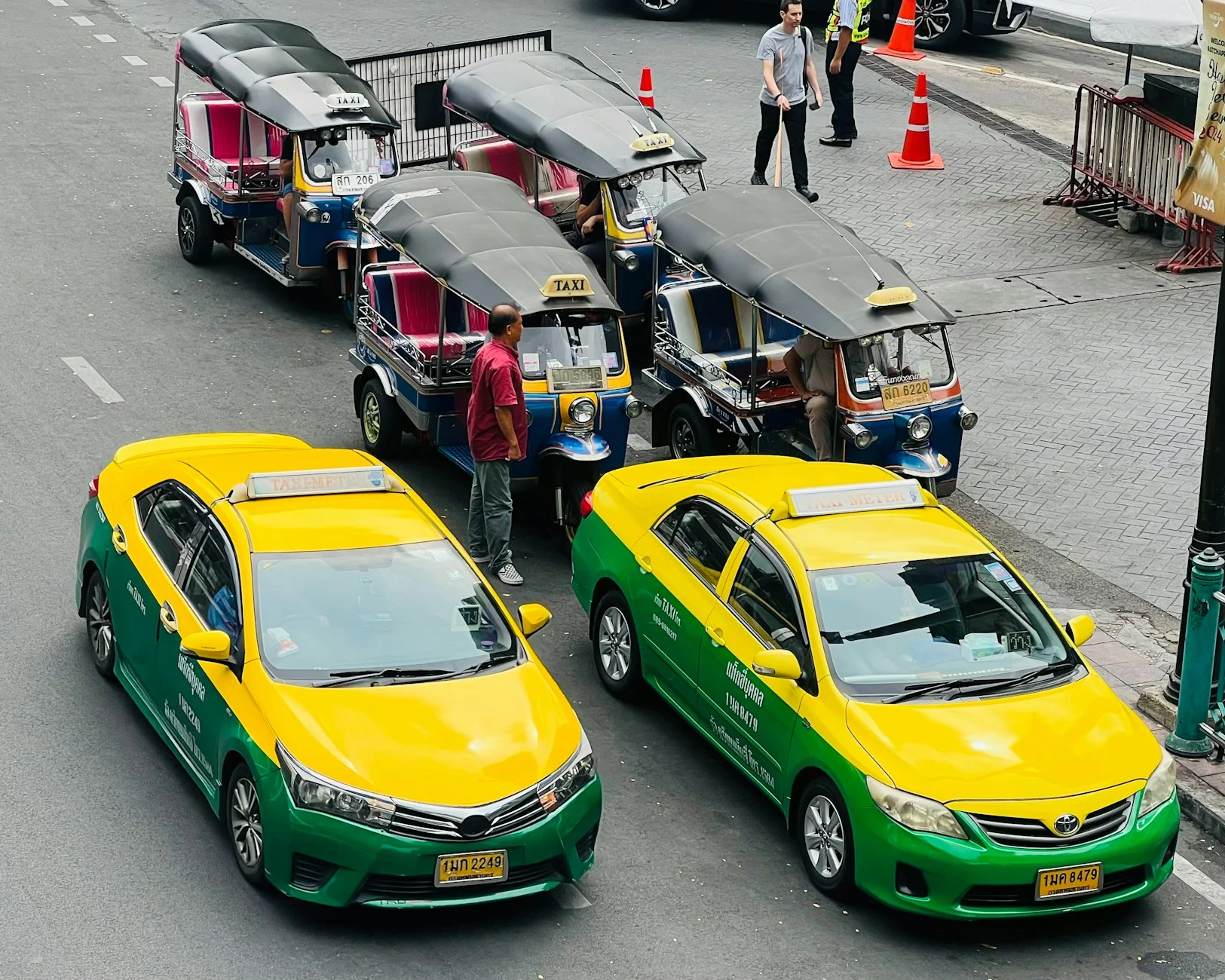
Grab (ride-hailing app) is the most reliable option for non-BTS journeys. A typical 10-minute Grab car ride costs 60 to 120 baht. A 30-minute cross-city journey runs 180 to 350 baht. Monthly Grab usage for several weekly trips runs 1,500 to 4,000 baht depending on frequency.
Metered taxis are slightly cheaper than Grab if you get one that uses the meter. If the driver refuses the meter, either negotiate a price you are comfortable with or use Grab instead. The 5-baht flag fall on metered taxis is the starting point; most short city trips run 60 to 150 baht.
Motorbikes in Chiang Mai, Phuket, and the Islands
Motorbike rental is the primary transport for most expats outside Bangkok. Rates in Chiang Mai: 2,800 to 3,500 baht per month for a basic automatic scooter (Honda Click or PCX). Weekly rates run 1,000 to 1,500 baht. Daily rates are 200 to 350 baht.
Phuket motorbike rental runs 3,500 to 5,000 baht per month for comparable scooters. The Phuket road conditions and tourist volumes make riding more complex than Chiang Mai. Island rentals (Koh Lanta, Koh Samui) run 2,500 to 4,000 baht per month. Fuel for island-only riding averages 500 to 800 baht per month.
Buying a Motorbike
A new Honda Click 125 costs around 55,000 to 60,000 baht. A used one in good condition (2 to 3 years old) runs 20,000 to 30,000 baht. A Honda Wave semi-automatic is cheaper to buy used at 15,000 to 25,000 baht. Buying is cost-effective for stays over 6 months. The trade-off is resale complexity and insurance paperwork as a foreigner.
Car Rental and Car Ownership
Monthly car rental for a standard sedan runs 10,000 to 20,000 baht. This is expensive relative to motorbike options and usually only justified for families, people with health restrictions on motorbikes, or those doing regular day trips. Short-term car rental (daily) costs 1,200 to 2,500 baht per day.
Buying a used car is technically possible as a foreigner with a long-stay visa but adds legal complexity. Many long-term expats lease a car instead or use Grab for the occasions when they need four wheels.
Intercity Transport Costs
Bangkok to Chiang Mai by train (overnight sleeper, second class): around 700 to 1,000 baht. By budget airline (AirAsia or Lion Air): 500 to 2,000 baht depending on booking lead time. Bangkok to Phuket by plane: 700 to 2,500 baht. Bus is cheapest for medium distances but takes significantly longer.
Monthly Transport Budget Summary
Bangkok BTS-based lifestyle: 1,500 to 4,000 baht per month (pass plus occasional Grab). Chiang Mai motorbike life: 3,500 to 5,000 baht per month (rental plus fuel). Phuket or island motorbike: 4,000 to 6,000 baht per month including fuel.
Transport Cost Comparison by City
City | Best option | Monthly cost | Notes |
|---|---|---|---|
🏙️ Bangkok | BTS monthly pass + Grab | 2,500 to 4,000 baht | Pass covers Skytrain at 950 baht; Grab fills the gaps |
🌿 Chiang Mai | Rented motorbike + fuel | 3,500 to 5,000 baht | No metro system; songthaews work for fixed routes |
🌊 Hua Hin | Rented motorbike + fuel | 3,500 to 4,000 baht | 2,500 baht rental plus 1,000 to 1,500 baht fuel |
🏖️ Phuket | Rented motorbike + fuel | 4,000 to 6,000 baht | Car better in tourist-heavy areas with poor road conditions |
🚗 Car (any city) | Lease + insurance + fuel | 12,000 to 20,000 baht | Adds 8,000 to 15,000 baht above motorbike costs; suits families |
Car ownership adds insurance (10,000 to 20,000 baht per year), road tax, periodic servicing, and parking on top of fuel. It is only worth the cost for families, people with health restrictions on motorbikes, or those in areas with poor transit coverage.
Where to go from here
Transport is one piece of the monthly budget. These guides cover everything else.
For full monthly costs by city: the cost of living in Thailand guide covers rent, food, utilities, and transport together at three spending levels across every major expat city.
For Bangkok specifically: the Bangkok neighbourhood guide covers which areas are BTS-dependent and what the commute actually looks like day to day.
For Chiang Mai: the cost of living in Chiang Mai guide covers motorbike versus Grab versus songthaew as a daily transport strategy with real monthly figures.
For choosing a city: the best cities to live in Thailand guide compares Bangkok, Chiang Mai, Phuket, and Hua Hin with transport infrastructure as one of the key variables.