How to Apply for the Thailand LTR Visa 2026: The Full Process
Most people who start researching the Thailand LTR Visa get confused at the same point: they think it works like a normal visa application. Submit documents to an embassy, wait, collect your stamp. The LTR does not work like that.
It runs through Thailand's Board of Investment, not through standard immigration channels. It involves two separate stages with two separate agencies. Miss that distinction and you submit the wrong documents to the wrong place and start again from scratch. Get it right and you have a 10-year visa, annual reporting instead of 90-day, and fast-track immigration at every major Thai airport.
This is the full process, step by step, using the official BOI requirements.
What the LTR Visa Actually Is
The LTR Visa (Long-Term Resident Visa) was launched by Thailand's Board of Investment in September 2022. It is a 10-year visa structured as two consecutive 5-year stamps. The program exists to attract high-net-worth individuals, retirees, remote workers, and skilled professionals. The Thai government has a stated target of drawing one million high-value foreign residents within five years of launch.
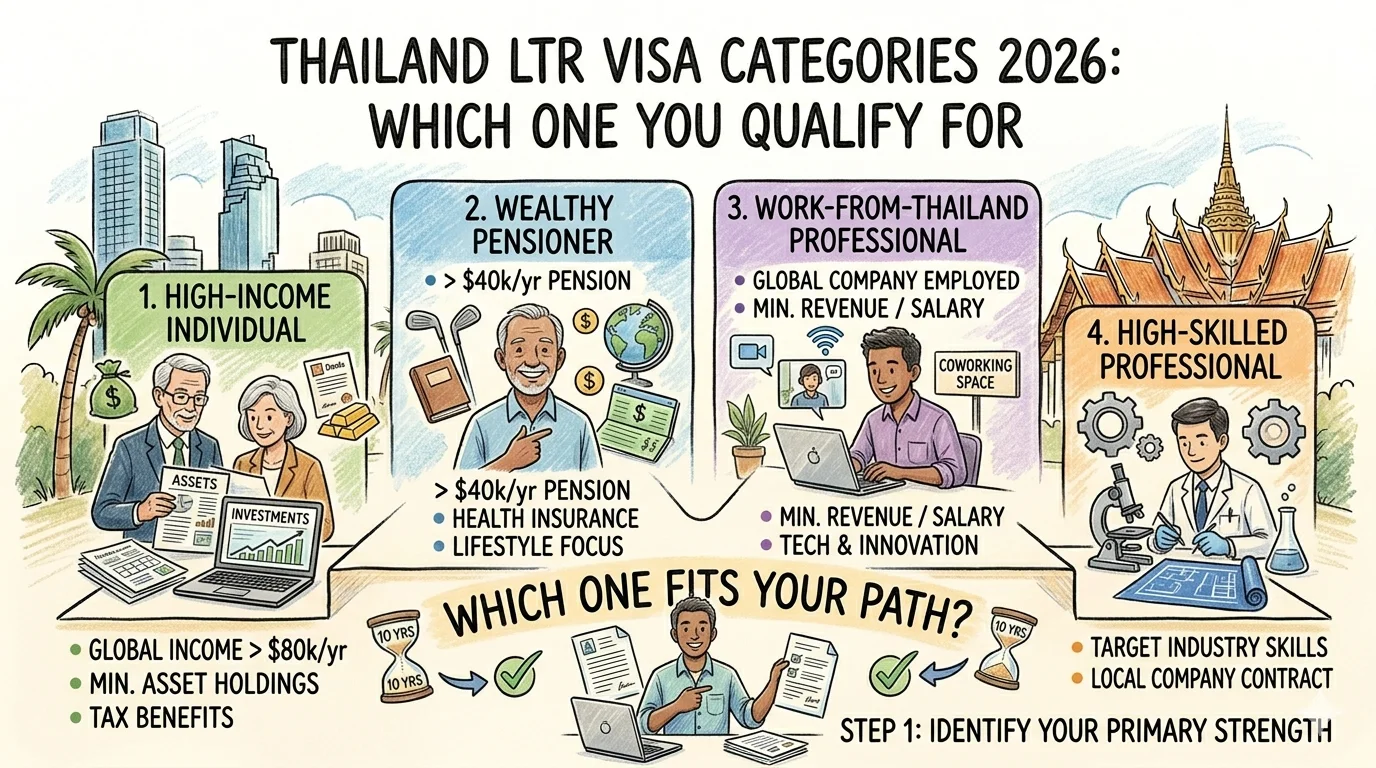
The visa is divided into four categories. Every application process is the same two-stage structure, but the documents you submit depend entirely on which category you qualify under. Before doing anything else, confirm your category. The full breakdown is in Thailand LTR Visa Categories 2026: Which One You Qualify For.
The Benefits Before You Start
Understanding what you are applying for makes the paperwork feel less like an obstacle.
Benefit | Detail |
|---|---|
Stay duration | 10 years (5 + 5 year extension) |
Reporting | Annual (not 90-day) |
Re-entry | Multiple re-entry permit included |
Airport | Fast-track at Suvarnabhumi, Don Mueang, Chiang Mai, Phuket |
Tax (Pensioners / Remote Workers / Wealthy) | 0% on foreign-sourced income |
Tax (Highly Skilled Professionals) | Flat 17% on Thai-sourced income |
Work permit | Digital work permit available through BOI portal |
Employment ratio | Exempt from the 4 Thai to 1 foreign staff requirement |
Dependents | Spouse and children under 20 eligible for dependent LTR visa |
The Two-Stage Process: What Most People Get Wrong
The LTR application is not one process. It is two separate processes with two separate agencies.
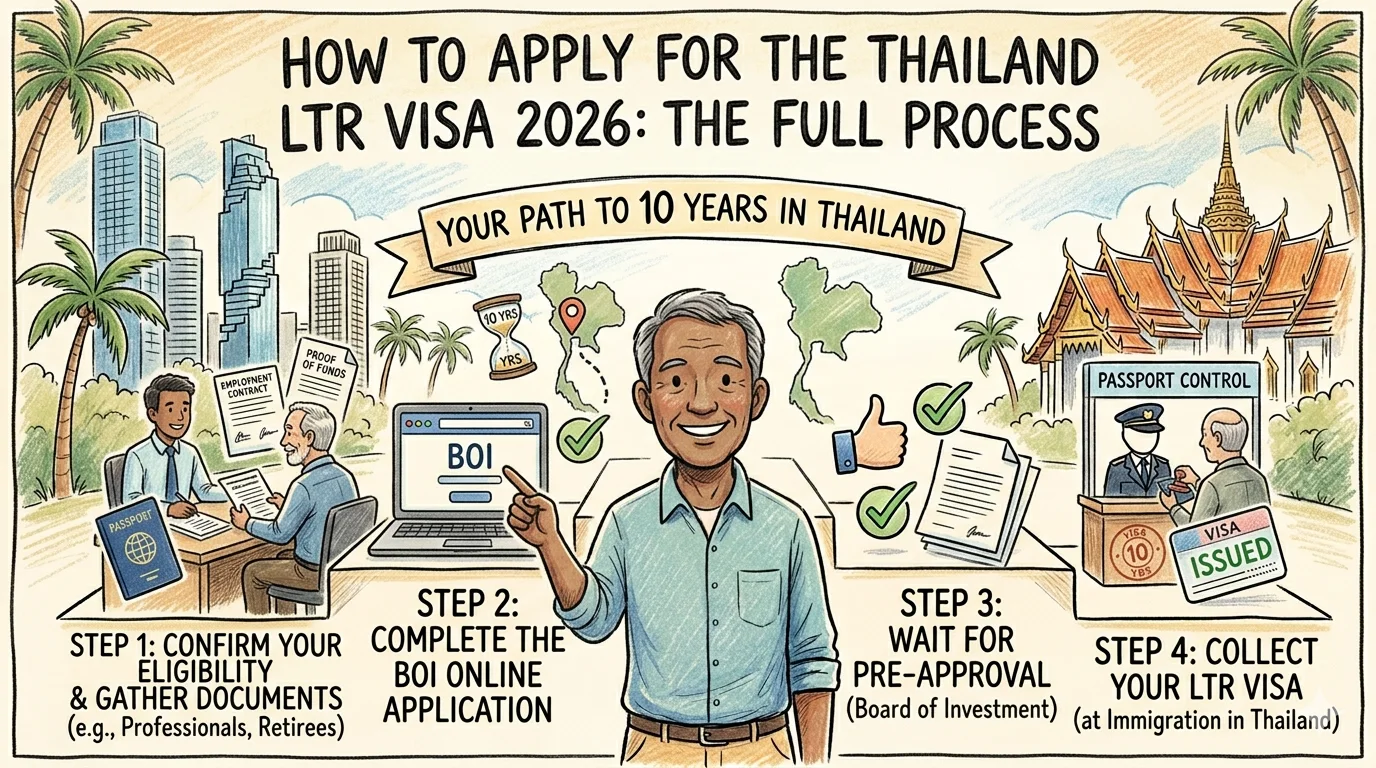
Stage 1: BOI endorsement. This is not your visa. It is a confirmation from the Board of Investment that you meet the LTR category requirements.
Stage 2: Visa issuance. Once you have your BOI endorsement letter, you take it to collect the actual visa stamp, either at the Thailand Investment and Expat Services Center (TIESC) in Bangkok or at a Royal Thai Embassy abroad.
Applicants who treat Stage 1 as the finish line miss the 60-day window to collect their visa after endorsement. Applicants who try to skip Stage 1 and apply directly at an embassy for an LTR stamp are applying for something that does not exist that way. Both mistakes add months to the timeline.
Step 1: Check Your Category and Eligibility
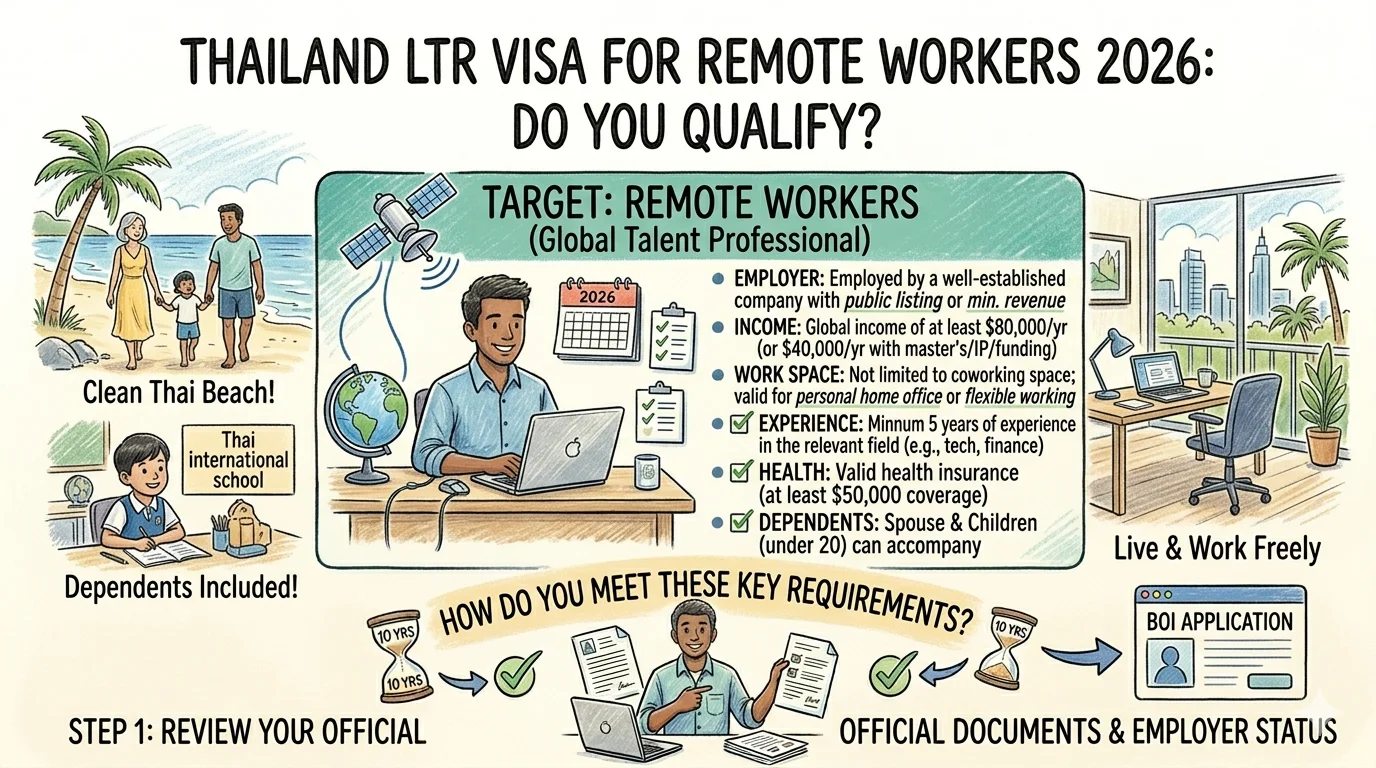
The four LTR categories have different income thresholds, asset requirements, and employer criteria. The income floor for most categories is USD 80,000 per year averaged over the past two years. A reduced threshold of USD 40,000 applies for applicants with a master's degree or higher in science and technology.
All categories require health insurance covering a minimum of USD 50,000, or alternatively a deposit of at least USD 100,000 maintained in a Thai bank account for no less than 12 months, or current social security coverage in Thailand.
For the remote worker category specifically, your employer must be a public company listed on a stock exchange, a private company with at least 3 years of operation and combined revenue of USD 50 million over the last 3 years, or a wholly owned subsidiary of either. This requirement disqualifies most self-employed applicants and freelancers. If you work independently, see Thailand LTR Visa for Remote Workers 2026 for how this category is assessed in practice.
For the full category eligibility breakdown: ltr.boi.go.th
Step 2: Gather Your Documents
The BOI publishes the official required documents list for each category separately. Download the list for your specific category before assembling anything:
Documents required across all categories include:
Valid passport with at least 18 months remaining
Passport-sized photographs
Proof of income for the past two years (tax returns, W-2s, payslips, or pension statements)
Bank statements showing required asset or balance levels
Health insurance certificate showing minimum USD 50,000 coverage
Criminal record certificate from your home country
Employment contract or proof of company eligibility (remote worker category)
Investment certificates (Wealthy Global Citizen category)
For dependents:
Marriage certificate (legally registered marriages only; common-law partnerships are not accepted)
Birth certificates for children
All certificates must be officially translated and apostilled
The apostille requirement is where most applications slow down. Certificates from some countries take 4 to 8 weeks to apostille through official channels. Build this into your timeline before submitting anything.
Step 3: Create an Account and Submit Online
All LTR applications are submitted through the BOI's official online portal. There is no paper submission option.
Register and apply here: visa.boi.go.th/register
Each applicant, including each dependent, requires a separate account. Once registered, upload all required documents into the portal against the checklist for your category. The system flags missing documents before formal submission.
The official processing period after submission is 20 working days. In practice, the full BOI review typically takes between 4 and 6 weeks from submission to endorsement, depending on application volume and document completeness. Incomplete document sets extend this significantly.
Step 4: BOI Review and Endorsement
The BOI reviews your application against the category criteria. They may request additional documents during this stage. Respond promptly: delays in responding extend your processing timeline without pausing the review clock.
Once the BOI is satisfied with your application, they issue an endorsement letter. This endorsement is not your visa. It is clearance to proceed to Stage 2. The endorsement is valid for 60 days, during which you must collect the actual LTR visa stamp.
Step 5: Visa Issuance
With your BOI endorsement letter, you collect the visa stamp through one of two routes:
If you are in Thailand: Visit the Thailand Investment and Expat Services Center (TIESC) at the 6th and 7th floors of One Bangkok, PARADE Zone, Rama IV Road, Lumphini, Pathum Wan, Bangkok 10330. TIESC is accessible via MRT Lumphini station. The center handles both visa issuance and work permit processing.
Contact TIESC directly:
Email: ltr@boi.go.th
Tel: +66 (0) 2209 1109 or +66 (0) 2209 1110
Full visa issuance information: ltr.boi.go.th/page/visa-issuance-info.html
If you are outside Thailand: Present your endorsement letter at a Royal Thai Embassy or Royal Thai Consulate General in your country of residence to collect the LTR visa stamp.
The government fee for the LTR Visa is 50,000 baht per person, approximately USD 1,500 at current rates. This is paid at the visa issuance stage, not during the BOI endorsement stage.
Step 6: After You Enter Thailand
Once you enter Thailand on your LTR visa, the administrative requirements are lighter than any other long-stay visa in the country.
Annual reporting: Instead of the standard 90-day report to immigration, LTR holders report once per year. This can be done online. The full reporting process is at ltr.boi.go.th/page/1-year-reporting.html
Digital work permit: If you need to work in Thailand, apply for a digital work permit through the BOI portal. This applies to the Work-from-Thailand and Highly Skilled Professional categories.
Maintaining eligibility: All conditions that qualified you for the LTR must be maintained throughout the visa duration. This includes income levels, investment amounts, bank balances, insurance coverage, and employment status. Failing to maintain these conditions is grounds for cancellation.
Full Timeline
Stage | Action | Time Required |
|---|---|---|
Pre-application | Confirm category, gather documents, apostille certificates | 4–8 weeks |
Stage 1 | Create BOI account, upload documents, submit | 1–2 days |
Stage 1 | BOI review and endorsement | 4–6 weeks |
Stage 2 | Collect visa at TIESC or embassy | 1–5 days |
Total | From document gathering to visa in hand | 8–14 weeks |
Plan for 3 months from starting your document collection to holding the visa stamp. Applications with apostille delays or incomplete documents run longer.
Common Mistakes That Delay Applications
Treating the BOI endorsement as the final step. The endorsement is valid for 60 days. Missing the collection window means starting Stage 2 again.
Submitting un-apostilled documents. The BOI does not accept documents that have not been officially apostilled or legalised. Certificates from countries that are not signatories to the Hague Convention require legalisation through the Thai embassy, which takes longer.
Listing a common-law partner as a dependent. Only legally registered marriages are recognised for dependent visa eligibility.
Applying under the wrong category. Switching categories after submission requires starting the application from the beginning.
Official Resources
All application information, document lists, forms, and the application portal are maintained by the BOI at the following official links:
Programme overview and eligibility: ltr.boi.go.th
Online application portal: visa.boi.go.th/register
Required documents by category: ltr.boi.go.th/page/required-documents.html
Application timeline: ltr.boi.go.th/page/application-timeline.html
Visa issuance information: ltr.boi.go.th/page/visa-issuance-info.html
Annual reporting: ltr.boi.go.th/page/1-year-reporting.html
Immigration rules change. Always verify current requirements against the official BOI portal before submitting your application.
Where to Go from Here
For which LTR category you qualify under: Thailand LTR Visa Categories 2026: Which One You Qualify For.
For remote workers assessing their specific eligibility: Thailand LTR Visa for Remote Workers 2026.
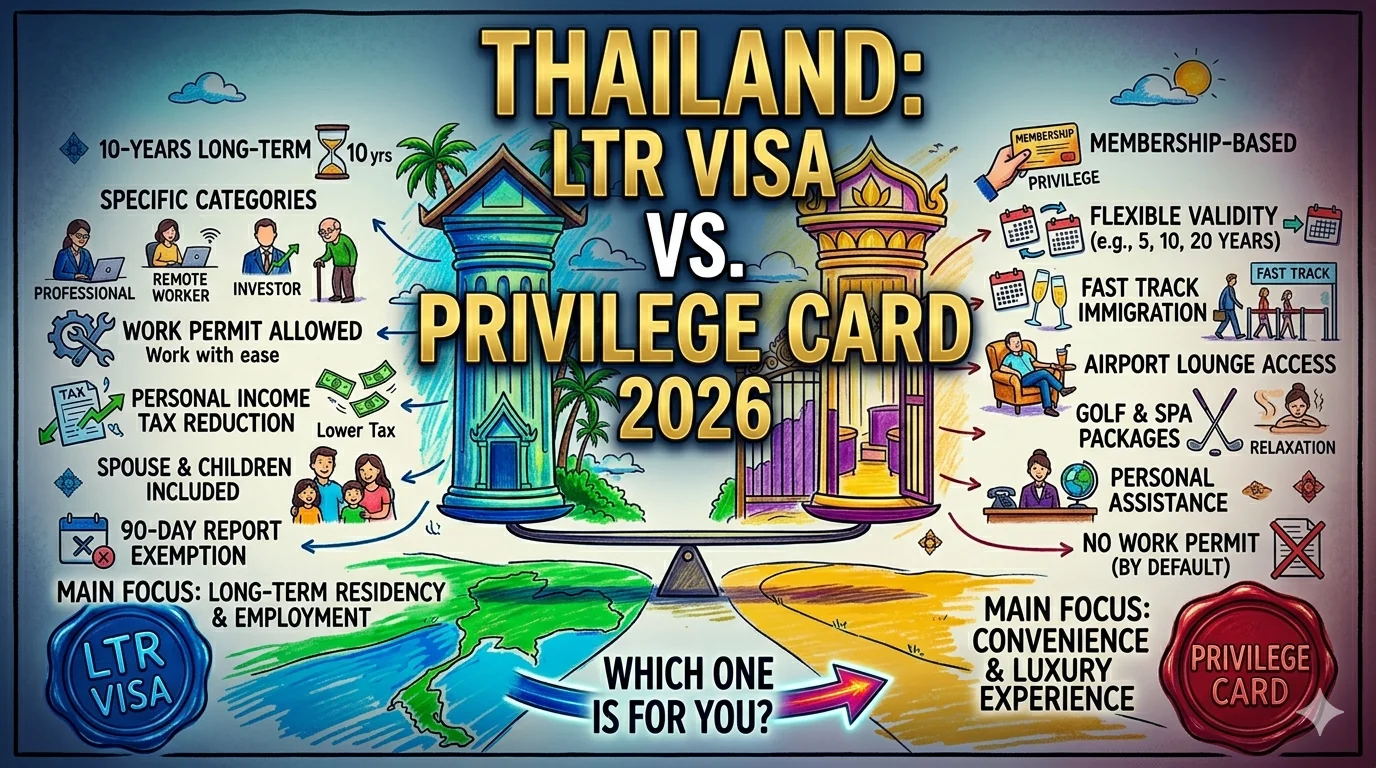
For how the LTR compares to the Thailand Privilege Card: Thailand LTR Visa vs Privilege Card 2026.
For the full LTR Visa destination overview: Thailand LTR Visa 2026.