Best Cards to Use in Thailand 2026: What to Bring and What to Leave Home
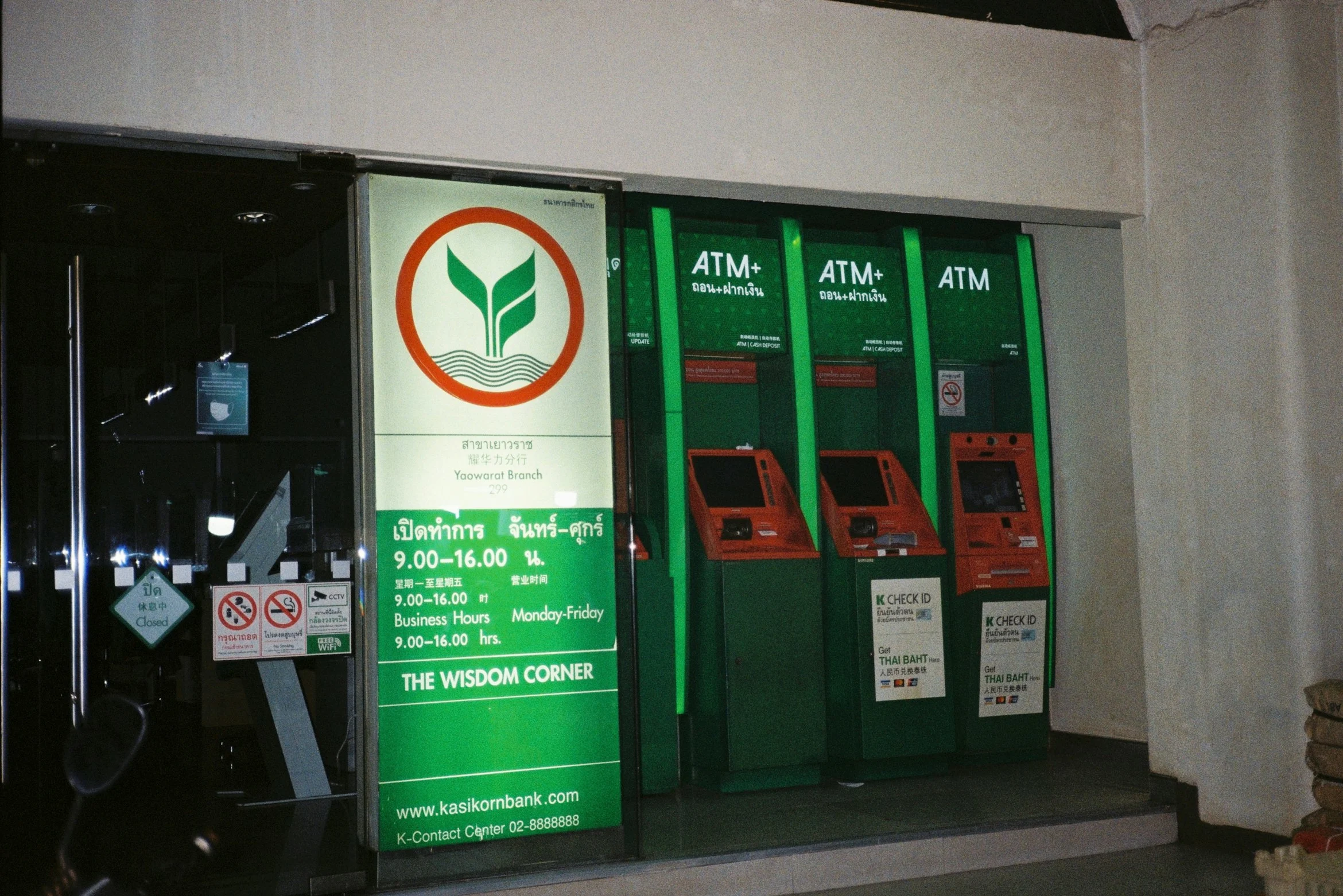
Every Thai ATM charges foreign cards 220 baht per withdrawal. That is approximately $6.50 USD per transaction on top of whatever your own bank charges. A tourist withdrawing cash three times a week pays 2,640 baht a month in ATM fees alone before their bank adds its foreign transaction fee on top.
The cards in this guide either reimburse that 220 baht fee automatically, absorb it into their cost structure, or eliminate the need to use ATMs as frequently in the first place. The cards to leave home are the ones that add a third layer of fees on top of everything else.
The Thailand ATM Fee Situation
Thai ATMs charge a flat 220 baht foreign card fee on every withdrawal, regardless of which ATM network or bank you use. This is a bank-to-bank fee that goes to the Thai bank operating the ATM. It applies to every foreign card, including Visa and Mastercard, at every Thai bank's ATM. There is no way to avoid it except using a card that reimburses it.
The maximum single withdrawal at most Thai ATMs is 20,000 to 30,000 baht depending on the bank. SCB ATMs typically allow up to 30,000 baht per withdrawal, which reduces the 220 baht fee to a lower percentage of the total withdrawn.
Strategy: Withdraw larger amounts less frequently to minimise the per-transaction fee cost. Withdraw 20,000 to 30,000 baht per withdrawal rather than small amounts daily.
The DCC Warning: Read This Before Using Any ATM
Every Thai ATM will offer you a choice when you insert a foreign card: be charged in Thai baht or in your home currency. Always choose Thai baht. Always.
Dynamic Currency Conversion (DCC) means the ATM converts the amount at its own exchange rate rather than your card's rate. The ATM rate is typically 3 to 8 percent worse than the mid-market rate. It is a significant fee hidden inside a currency conversion. Choosing your home currency at a Thai ATM is one of the most expensive financial mistakes you can make in Thailand. The same applies at card payment terminals in shops and restaurants.
If a payment terminal shows you an amount in your home currency and asks you to confirm, press the button that says "pay in THB" or "Thai baht" or the equivalent. Decline the conversion. Every time.
Card Comparison
Card | ATM Fee Reimbursement | Foreign Transaction Fee | Free Monthly ATM Limit | Availability |
|---|---|---|---|---|
Charles Schwab Debit | Unlimited, worldwide | None | Unlimited | US residents only |
Wise Card | Up to $100 (2 withdrawals) | None | $100/month | Most countries (see 2026 Thai address note) |
Revolut Standard | Up to €200/month | None | €200/month | Most countries |
Starling Bank | Free up to £300/day | None | Unlimited withdrawals | UK residents only |
Standard bank card | None | 1.5–3% | None | All |
Charles Schwab Investor Checking: The Best ATM Card in the World for US Residents
The Charles Schwab Investor Checking account reimbursed every ATM fee charged anywhere in the world at the end of every month, with no cap. This includes the 220 baht Thai ATM fee, every time, automatically. There is no monthly limit on reimbursements. There is no foreign transaction fee. The exchange rate used is the Visa mid-market rate.
For US-based expats, retirees, and frequent travellers to Thailand, this card removes the ATM fee problem entirely. The account requires opening a linked Schwab brokerage account, but there is no requirement to invest or maintain a minimum balance. You open it, get the debit card, and every ATM withdrawal you make in Thailand for the rest of your life is reimbursed.
There is no affiliate link for Charles Schwab because they do not operate an affiliate programme. The recommendation is here because it is the strongest card available for this specific use case.
Wise Card: Best for Multi-Currency Spending (With the 2026 Thai Address Caveat)
The Wise card uses the mid-market exchange rate with no foreign transaction fee at merchant payment terminals. For card spending at restaurants, hotels, and shops in Thailand it is one of the cleanest options available.
For ATM withdrawals, Wise provides 2 free withdrawals per month up to a combined total of the monthly limit for your account country (approximately $100 USD equivalent for US-linked accounts). After the limit, a 2.69 percent fee applies per withdrawal.
Important 2026 update: If your Wise account is registered to a Thai address, your card will no longer work for ATM withdrawals inside Thailand from August 2026. This change does not affect accounts registered to non-Thai addresses. See Using Wise in Thailand 2026 for the full details on how to manage this.
For tourists and expats with home-country Wise accounts, the card remains an excellent choice for card payments in Thailand and limited ATM withdrawals within the monthly free allowance.
Revolut: Best for Existing Users and European Travellers
Revolut provides free ATM withdrawals up to €200 per month on the standard free plan, with 2 percent charged on amounts above the limit. The exchange rate uses the interbank rate on weekdays and a small markup on weekends. For card payments at merchants, the rate is competitive and there are no foreign transaction fees.
Revolut's advantage is the all-in-one app experience: budgeting tools, spending notifications, currency conversion, and the ability to hold multiple currencies. For travellers who use Revolut as their primary financial app, using it in Thailand is seamless.
The limitation is the monthly ATM cap on the free plan. Travellers or expats who need more than €200 in monthly ATM withdrawals should either upgrade to a paid Revolut plan or use a secondary card (Schwab for US residents, Starling for UK residents) for higher ATM usage.
Starling Bank: Best Option for UK Residents
Starling Bank provides free ATM withdrawals abroad up to £300 per day with no foreign transaction fees on the standard free current account. There is no monthly cap on the number of free international withdrawals, making it closer to the Charles Schwab model for UK residents than any other UK card.
Starling is available only to UK residents. It is the clearest recommendation for any UK-based expat or long-stay visitor to Thailand.
Cards to Leave at Home
Any card with a foreign transaction fee of 1.5% or higher: The combination of the Thai ATM's 220 baht fee plus your bank's foreign transaction fee plus your bank's exchange rate markup adds up quickly. A 3 percent foreign transaction fee on top of a 220 baht ATM fee on a 10,000 baht withdrawal is an effective fee rate of 5.2 percent. That is the real cost of using a standard bank card in Thailand.
Credit cards for ATM withdrawals: Credit card cash advances in Thailand carry cash advance fees (typically 3 to 5 percent) plus interest from the day of withdrawal. This is a significantly more expensive way to access cash than any debit card.
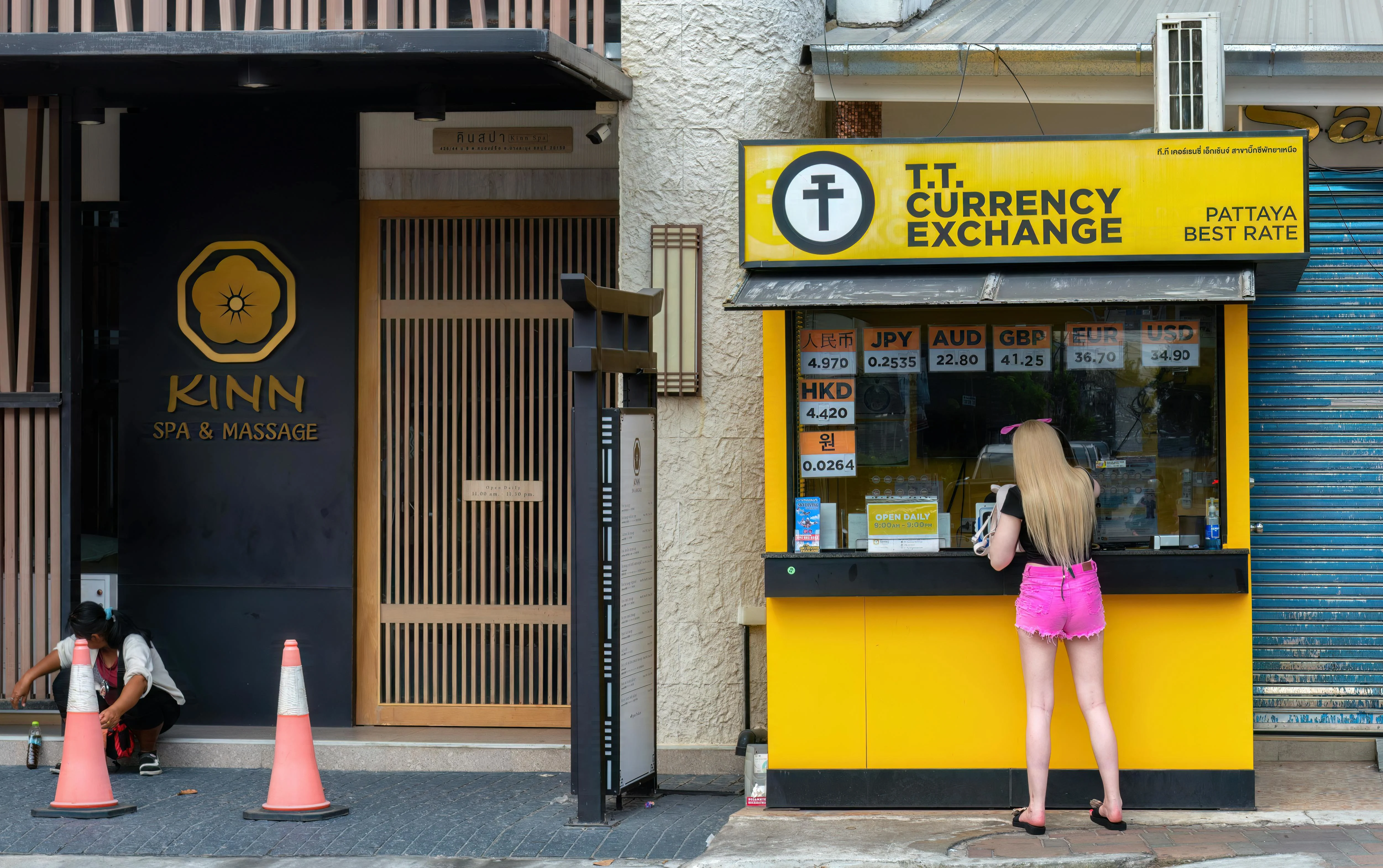
Currency exchanges at the airport before you leave: Exchange rates at home-country airports and exchange bureaus are typically 8 to 12 percent worse than withdrawing baht from a Thai ATM on arrival. Bring a card, not pre-exchanged cash.
The Practical Strategy
Bring two cards. One primary card for ATM withdrawals (Schwab for US residents, Starling for UK, Revolut for everyone else). One backup card in a separate location in case one is lost or swallowed by an ATM.
Use ATMs at bank branches during business hours. If an ATM swallows your card, you can retrieve it immediately. An ATM at a convenience store at midnight does not have that option.
Use SCB or Bangkok Bank ATMs for the highest withdrawal limits. SCB ATMs typically allow up to 30,000 baht per withdrawal, reducing the fee-to-amount ratio on each transaction.
Pay by card where possible. Every card payment with a Wise or Revolut card at a Thai merchant avoids the 220 baht ATM fee entirely. Major hotels, restaurants, and shops in tourist areas accept Visa and Mastercard. Street food, markets, and small vendors are primarily cash-only.
Where to Go from Here
For the cheapest way to send larger amounts from abroad to your Thai bank account: Sending Money to Thailand 2026.
For understanding what Wise can and cannot do for your specific Thailand situation: Using Wise in Thailand 2026.
For opening a Thai bank account to reduce reliance on foreign cards for daily spending: How to Open a Bank Account in Thailand as a Foreigner 2026.
For the full banking guide for foreigners in Thailand: Open a Bank Account in Thailand as a Foreigner.