Opening a Kasikorn Bank Account as a Foreigner in Thailand 2026
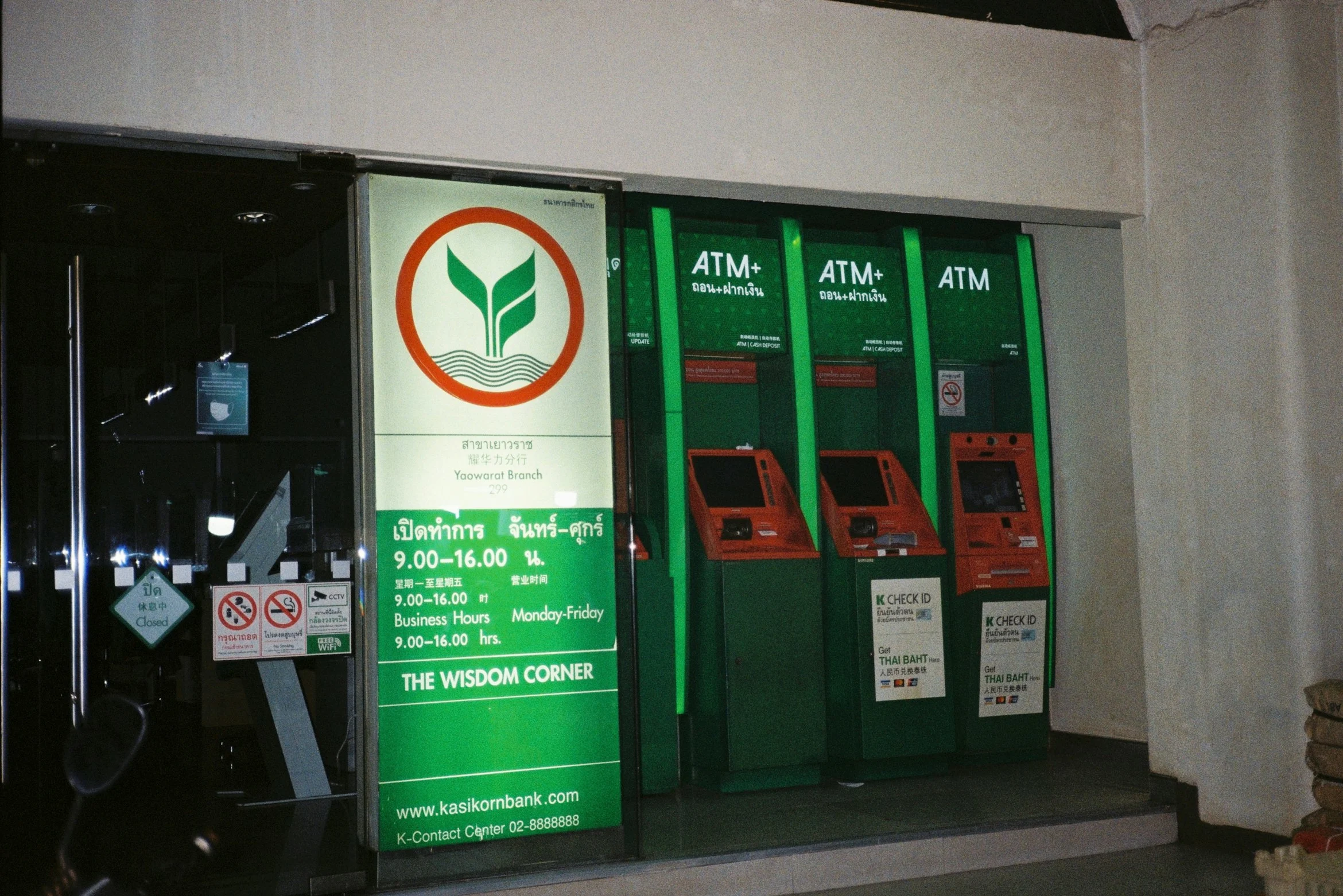
Kasikorn Bank has the best mobile banking app of any Thai bank. K PLUS runs in English, handles QR payments, allows cardless ATM withdrawals, processes PromptPay transfers, and does almost everything you need to manage daily Thai finances from your phone. It is the main reason most expats who have a choice between Thai banks end up choosing KBank.
Getting the account open is the harder part. KBank requires a non-immigrant visa. Tourist visas, visa-on-arrival entries, and visa-exempt stays are not accepted. If you have the right visa and the right documents in the right branch, the process takes 1 to 2 hours. If you show up at the wrong branch without calling ahead, you can waste an afternoon and walk out with nothing.
This guide covers exactly what you need, which branches work, and what to do if you are turned away.
Who Can Open a KBank Account
KBank is open to foreign nationals holding a valid non-immigrant visa. The visa category determines eligibility. The following are accepted:
Non-Immigrant O (retirement, marriage to Thai national, visiting family)
Non-Immigrant OA (long-stay retirement visa)
Non-Immigrant B (business or employment)
Non-Immigrant ED (education or language study)
LTR Visa (Long-Term Resident, all categories)
Non-Immigrant OX (10-year retirement visa)
Tourist visas, visa-on-arrival, and visa-exempt entries are not accepted. This is the hard rule. Some branches occasionally open accounts for tourists on a case-by-case basis at branch manager discretion, but this is not policy and cannot be relied upon. If you are in Thailand on a tourist visa and need a bank account urgently, Bangkok Bank has historically been the most flexible, but even that has tightened since 2024.
Documents Required
Bring originals of everything. Photocopies are made at the branch. Arriving without an original, even if you have a clear photocopy, typically results in a trip home to collect it.
Core documents (all applicants):
Valid passport with at least 6 months remaining
Current non-immigrant visa stamp in your passport
Proof of Thai address: rental contract, utility bill, or signed letter from your landlord
Additional documents by visa type:
Visa Type | Additional Document |
|---|---|
Non-Immigrant B (work) | Work permit (original) + employer letter |
Non-Immigrant O (retirement) | Retirement visa extension document from immigration |
Non-Immigrant O (marriage) | Thai marriage certificate |
Non-Immigrant ED | Enrollment letter from school or language institution |
LTR Visa | LTR endorsement letter from BOI |
Non-Immigrant OA | Current visa + most recent 90-day report receipt |
Optional but helpful for all applicants:
Employment letter stating your position, salary, and length of employment
Recent bank statement from your home country bank
Minimum opening deposit in cash: 500 to 2,000 baht depending on branch
The work permit is the single document that most smoothly opens doors at KBank. If you have one, bring it. If you do not, the combination of rental contract, non-immigrant visa, and a clear statement of your purpose in Thailand covers most branch requirements.
Which Branches Work Best for Foreigners
Branch experience at KBank varies more than it should. A branch inside a large shopping mall with dedicated English-speaking staff processes foreign account applications routinely. A small kiosk-style branch in a residential neighbourhood may have never processed a foreign account application and may decline yours even if you have the right documents.
Best KBank branches for foreign account opening in Bangkok:
Siam Paragon (near BTS Siam) — the most consistently cited branch for foreign accounts, English-speaking staff, experienced with expat documentation
Central World (near BTS Chit Lom) — similarly staffed for international customers
Mega Bangna (eastern Bangkok) — good reviews from Eastern Seaboard expat community
Asok/Terminal 21 (near BTS Asok) — convenient for Sukhumvit residents
Best KBank branches outside Bangkok:
Nimman Road (Chiang Mai) — experienced with the expat-heavy Nimman community
Central Festival (Phuket) — handles tourist area expat applications
Market Village Hua Hin — familiar with retiree documentation
The practical rule: Call the branch before you go. Ask specifically whether they open accounts for foreigners with your visa type. Branch staff will tell you what additional documents their specific branch requires. Policies differ between branches and can change. A phone call saves an unnecessary round trip.
The Step-by-Step Process
Step 1: Call ahead Phone your chosen branch and confirm they process foreign accounts for your visa type. Ask what documents they require beyond the standard list. Get the name of a staff member if possible.
Step 2: Arrive in the morning KBank branches open at 8:30am or 9am depending on location. Arriving within the first hour avoids the midday queue and gives you time to resolve any document issues without rushing against closing time.
Step 3: Take a queue number At the branch entrance, take a queue number for account opening services. At larger branches this is a separate queue from general banking. Some branches use a tablet to select the service type.
Step 4: Meet with a bank officer The officer will review your documents, photocopy everything, ask about your purpose in Thailand and your intended use for the account, and have you complete an account opening form. Answer straightforwardly. Common purposes that do not raise questions: paying rent, receiving salary, managing living expenses, retirement savings.
Step 5: Complete the paperwork You will sign multiple forms including the account agreement, terms and conditions, and a declaration of account purpose. All forms are available in English at foreigner-friendly branches.
Step 6: Make your opening deposit The minimum opening deposit is typically 500 to 2,000 baht depending on the account type and branch. Bring cash. Some branches accept card for the initial deposit; most prefer cash.
Step 7: Receive your passbook and debit card Most branches issue a passbook on the spot. The debit card is typically issued immediately at larger branches or sent by post within 5 to 7 business days at smaller ones. The debit card requires activation either at an ATM or through the K PLUS app.
Step 8: Download and set up K PLUS Before leaving the branch, ask the officer to help you register your account on the K PLUS app. The app registration requires your Thai phone number for OTP verification. If you do not yet have a Thai SIM, get one before your bank appointment. The registration process can be done at the branch with the officer's assistance if you need support.
Total time in branch: 1 to 2 hours at a busy branch. 45 to 60 minutes if the branch is quiet and your documents are complete.
K PLUS: What It Does
K PLUS is the reason KBank consistently comes out ahead of Bangkok Bank and SCB in expat surveys about which Thai bank to use. The English-language interface is cleaner and more functional than competing apps and the features cover almost all daily banking needs.
What K PLUS does:
PromptPay QR payments to merchants and individuals (scan the QR code at restaurants, markets, and shops)
Bank transfers to any Thai bank account using PromptPay ID (phone number or national ID) or account number
Cardless ATM withdrawals using the app instead of your debit card
International transfers from your Thai account to overseas accounts
Top-up for phone bills, utilities, and services
Debit card management including temporary block, international payment settings, and transaction history
Account balance and statement access
What K PLUS requires:
Thai phone number (required for OTP during login and transactions)
Internet connection
Biometric or PIN authentication
The PromptPay QR payment system is the most practically useful feature for daily life in Thailand. Almost every vendor, from 7-Eleven to local restaurants to market stalls, accepts PromptPay QR payments. Once your KBank account is linked to PromptPay (done through K PLUS), you can pay almost anywhere in Thailand without cash or a physical card.
Account Types Available to Foreigners
Standard Savings Account: The default account for most foreign applicants. Earns interest (rate is low, typically 0.5 to 1 percent per year). Comes with a passbook and debit card. The majority of expats open this account.
K-eSavings Account: A digital savings account managed entirely through K PLUS with no minimum opening balance. Available online after an initial in-branch account is established, or in some cases directly through the app. No passbook.
Foreign Currency Deposit (FCD) Account: Available for holding up to 14 foreign currencies including USD, EUR, GBP, SGD, JPY, AUD, and others. Subject to additional restrictions and generally available only to permanent residents or under specific conditions. Not the standard foreigner opening. Inquire at the branch if this is specifically what you need.
Fees to Know
Fee | Amount |
|---|---|
Monthly account fee | None (standard savings) |
Annual debit card fee | 250–700 baht depending on card type |
KBank ATM withdrawal | Free |
Other Thai bank ATM withdrawal | 10–15 baht |
PromptPay transfer (same-day) | Free for most amounts |
International incoming transfer (SWIFT) | Receiving fee varies, typically 200–500 baht |
International outgoing transfer (SWIFT) | Fee varies by amount, plus exchange rate margin |
The annual debit card fee is the main ongoing cost. It is debited automatically from your account on the card anniversary date.
If You Are Turned Away
Branch refusal happens and it is not always rational or consistent. The same documents that work at one branch can be declined at another on the same day by a different officer applying a stricter interpretation of policy.
What to do if refused:
Politely ask which specific document they require that you have not provided
Note the branch name and officer
Try a different, larger branch with the same documents plus any additional document the first branch mentioned
KBank branches inside large malls (Siam Paragon, Central World) are the most consistently foreigner-friendly
If KBank refuses you and you urgently need a Thai account, Bangkok Bank is the traditional backup. Their Silom Road branch near BTS Sala Daeng has English-speaking staff experienced with foreign account applications. The documents required are broadly similar.
For LTR Visa Holders
The BOI specifically coordinates with Thai banks including KBank to facilitate account opening for LTR Visa holders. The official BOI guidance states that LTR holders should bring their passport, LTR endorsement letter, and Thai address proof to any KBank branch.
In practice, LTR holders tend to have the smoothest KBank account opening experience of any foreigner visa category because the BOI relationship is formalised and branch staff are more likely to be familiar with the documentation.
For the official BOI guidance on opening a Thai bank account as an LTR holder: ltr.boi.go.th/page/opening-bank-account-in-thailand.html
Where to Go from Here
For the cheapest way to send money from abroad into your new KBank account: Sending Money to Thailand 2026.
For the best cards to use alongside your KBank account for ATM withdrawals without fees: Best Cards to Use in Thailand 2026.
For how Wise works alongside a Thai bank account: Using Wise in Thailand 2026.
For the full banking guide for foreigners in Thailand: Open a Bank Account in Thailand as a Foreigner.
Official KBank website: www.kasikornbank.com