Hua Hin Food Guide: The Night Market and What Else to Eat
Hua Hin punches above its size on food. It is a royal resort town with a serious seafood supply chain, a morning market that opens at 5am and runs the entire city's kitchens, and enough evening markets that you could eat differently every night of a week-long stay without trying.
The night market gets all the attention. It deserves some of it. But the people who eat best in Hua Hin are the ones who show up at Chatchai Market at 6am and figure out the rest from there.
The Dish to Know First: Hoi Tod
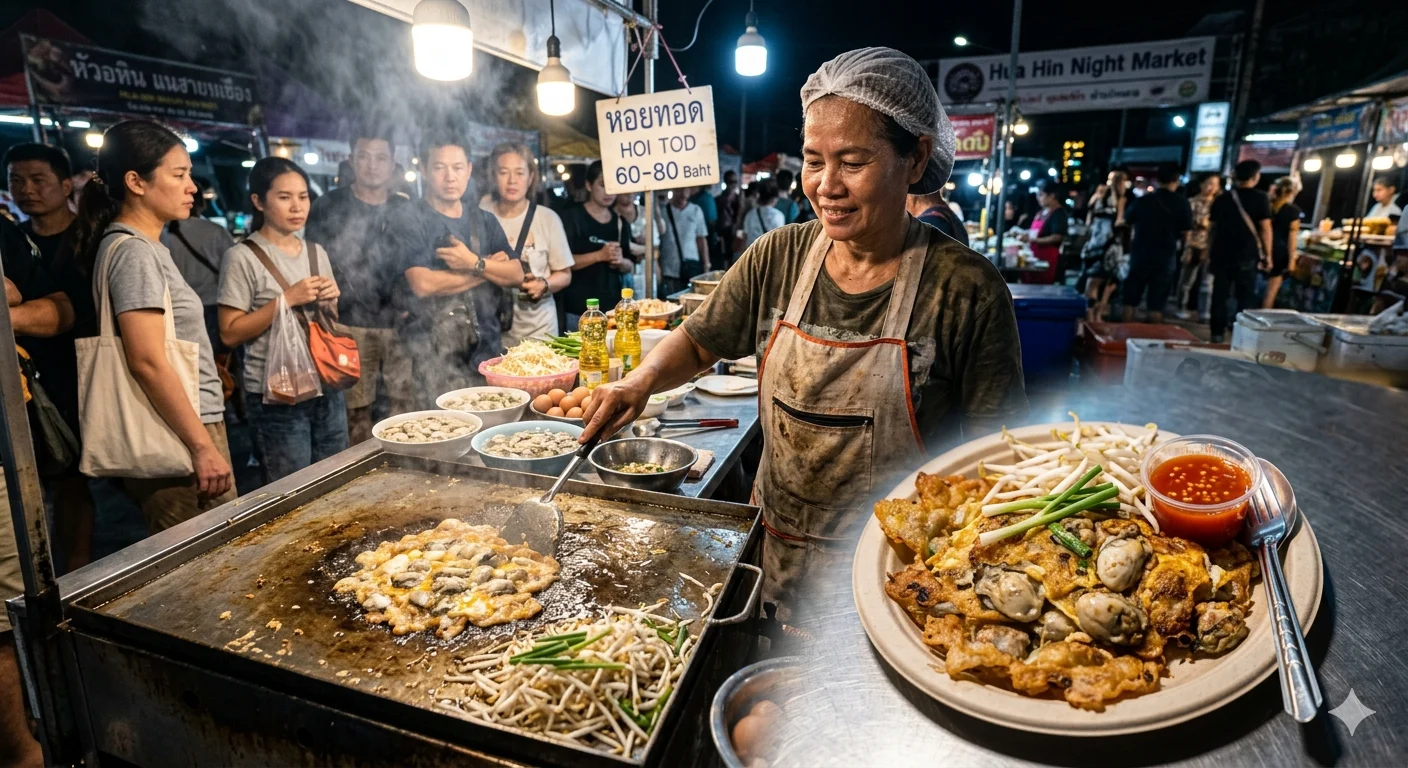
Hoi tod is Hua Hin's most iconic street dish and the one to order before anything else. A crispy oyster pancake fried on a flat iron griddle with egg, bean sprouts, and spring onions, served with a sriracha-style chilli sauce. It costs 60 to 80 baht at the night market. The best ones come from stalls where the cook is working a queue rather than standing with an empty griddle. Turnover means fresher oysters and a hotter pan. The crisp on the underside should shatter when you press it with a fork. If it bends, keep walking.
The Markets
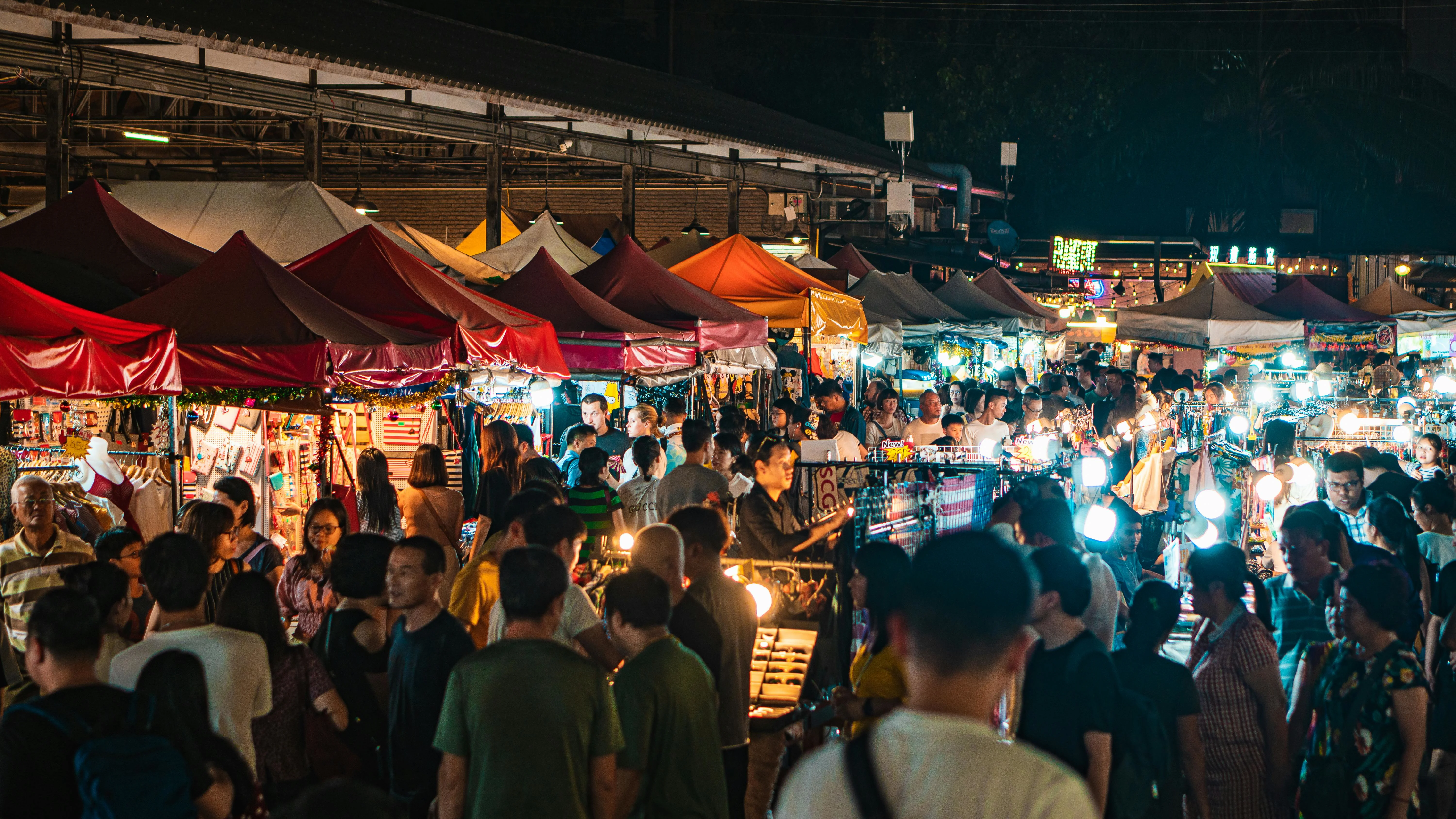
Hua Hin Night Market (Walking Street)
The night market runs every night from around 5pm to midnight near the clock tower in central Hua Hin. It is the most tourist-facing market in town and the right place to start if this is your first night and you want the full Hua Hin evening experience in one place.
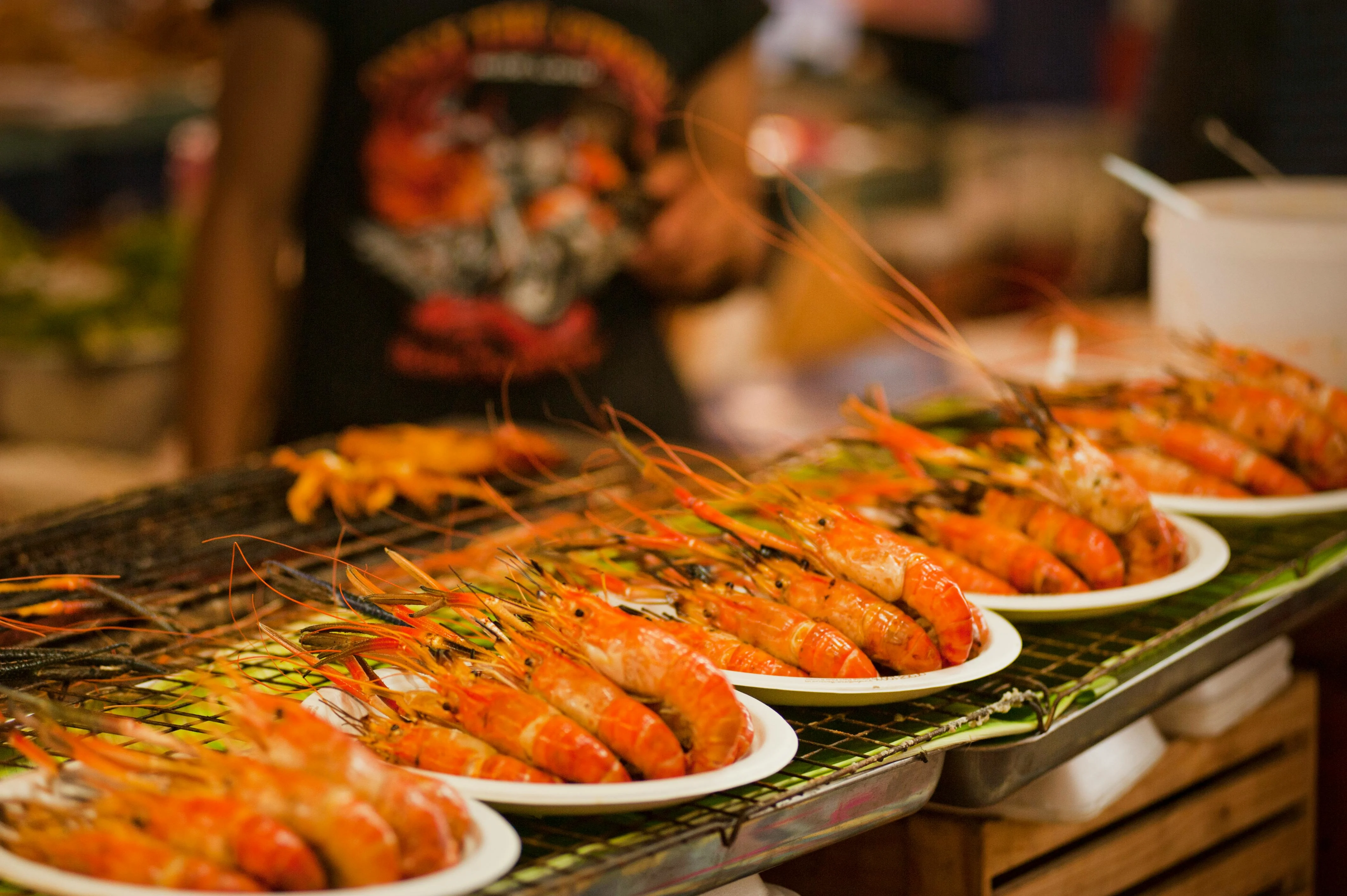
The market splits into two zones. The street food stalls run down the middle: three chicken skewers for 100 baht, pad thai for 80 to 100 baht, hoi tod, grilled corn, kanom krok coconut pancakes, fruit shakes, and enough dessert options to create a problem. The seafood restaurants line the edges with table service, English menus, and a range from simple stir-fried dishes at 120 baht to full seafood platters for two at 500 to 900 baht including drinks. Ko Seafood is the most established name along this strip.
Arrive before 7pm on weekends for seating at the better seafood restaurants. After that the tables fill and you are waiting. Bring cash. Most stalls do not take cards.
Chatchai Market: Where the City Actually Feeds Itself
Chatchai Market on Phetkasem Road opens at 5am and closes by noon. It is where Hua Hin's restaurants source their ingredients every morning and where the city's households have shopped for decades. It is not set up for tourists and that is precisely what makes it worth going to.
The produce section is the best reason to arrive before 7am. Fresh seafood from the previous night's boats is laid out on ice, the papaya is the size your recipes actually need, and the vendors selling crab curry paste and dried shrimp along the outer walls are selling to professional cooks who will not tolerate low quality. Several breakfast stalls operate inside the market serving boat noodles and congee at 40 to 60 baht a bowl. The cheapest and most honest breakfast in Hua Hin is in this market, eaten standing up, before the tourist hotels have finished making their buffet eggs.
Tamarind Market
Tamarind Market opens Friday to Sunday from 4pm to 11pm near Khao Takiab. Around 40 food vendors, live music on a central stage, plastic chairs, and a relaxed pace that the central night market cannot quite match. This is the one that people who live in Hua Hin actually go to on weekends.
The mango sticky rice here is the best in town: Mahachanok mango with coconut cream and black sticky rice at 80 to 120 baht. The Thai coconut pancake vendor consistently draws the longest queue, which is all the information you need about quality. A full evening at Tamarind costs 300 to 500 baht per person for food and drinks and feels like a proper night out rather than a meal stop on a tourist itinerary.
Tamarind takes cash directly at each stall. Cicada, which sits 100 metres away, uses a coupon system that slows everything down for no obvious reason. Most people who have been to both markets prefer Tamarind on food quality and Cicada on atmosphere and shopping. They are close enough to do both in one evening.
Cicada Market
Cicada opens Friday to Sunday from 4pm to 11pm next to Tamarind. The food is 10 to 20 percent pricier than Tamarind and the market tilts more toward handcrafted goods, art, jewellery, and clothing than food. The atmosphere is photographically good: the lighting is considered, the stall design is more consistent, and the live music stages are better positioned.
For food specifically, go to Tamarind first and walk to Cicada afterward. For shopping and the experience of a well-designed Thai market, Cicada is the better option. The gourmet food stalls here serve northern-style khao soi, grilled corn, and higher-end Thai dishes that do not appear at the night market. Budget 100 to 200 baht more per person if Cicada is your primary food stop.
Seafood: The Real Priority
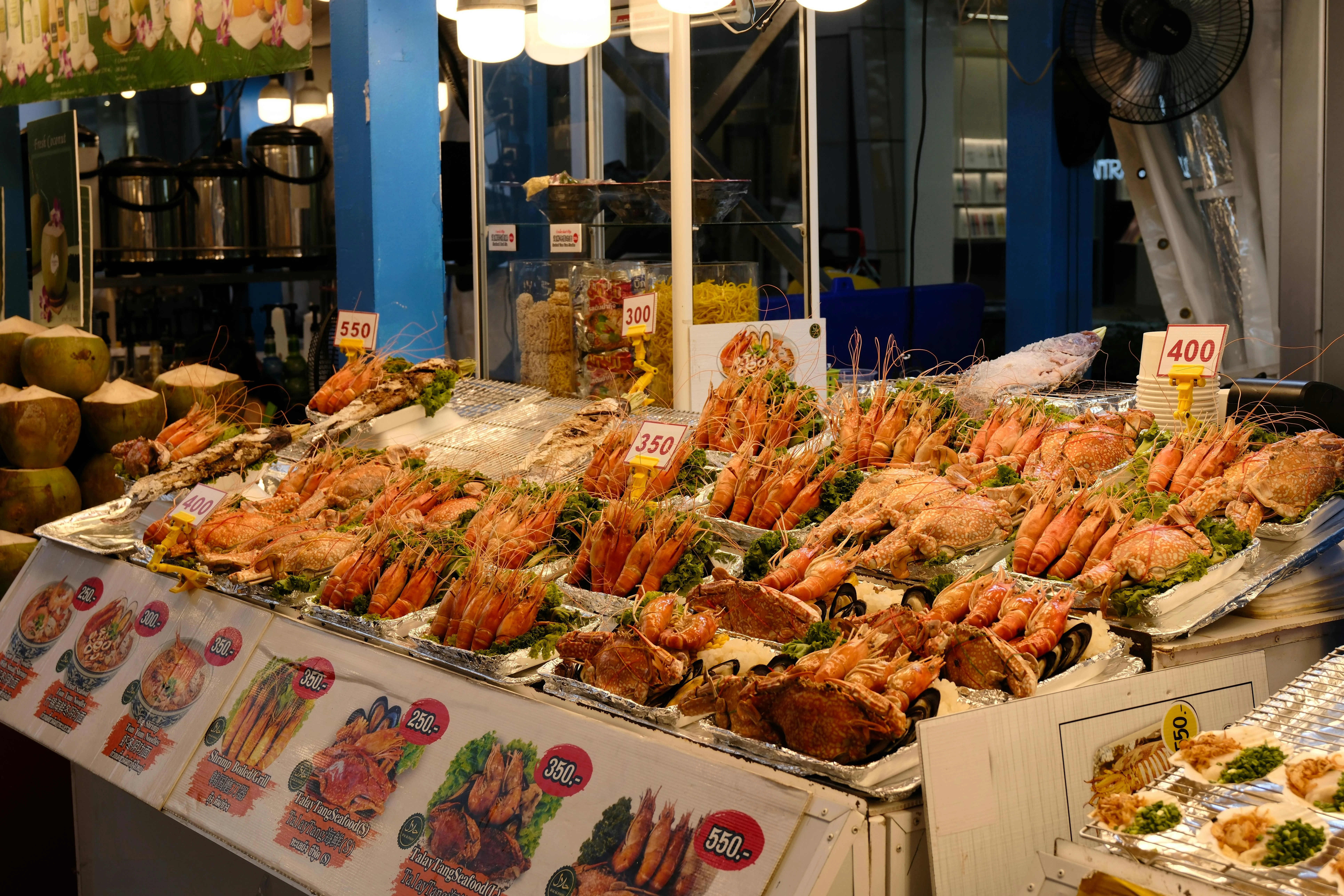
Hua Hin's coastline delivers seafood that Bangkok pays premium prices to import. Eating it here is the clearest food advantage the city has over anywhere inland.
At the night market: The seafood restaurants along the market's edge are the most convenient option for a full seafood dinner. Order pla kapong (sea bass) steamed with lime and chilli, goong pad prik (stir-fried prawns with chilli), and deep-fried soft-shell crab if it is on the daily board. A full dinner for two with Beer Leo runs 500 to 900 baht depending on how ambitious you are with the ordering.
South of the fishing pier: The beach-front seafood restaurants south of the old fishing pier sit close enough to the water that you can hear the waves while you eat. These are less polished than the night market restaurants and the menus are shorter. The tradeoff is fresher fish and lower prices. Grilled whole fish costs 200 to 400 baht depending on size and species.
Khao Takiab restaurant strip: The restaurants above Khao Takiab beach serve seafood at local rather than tourist prices. A plate of crab fried rice costs 80 to 120 baht. Steamed clams with lemongrass run 150 to 200 baht. This is where the long-stay expat residents in Khao Takiab eat three times a week and it shows in the quality of the regulars' relationships with the staff.
What to Order Beyond Seafood
Khao man gai: Poached chicken over rice with ginger-infused broth and a dark dipping sauce. The most reliable 60-baht lunch in any Thai coastal city. Find it at the stalls inside Chatchai Market from 6am and at the smaller restaurants off the main tourist strip from lunchtime.
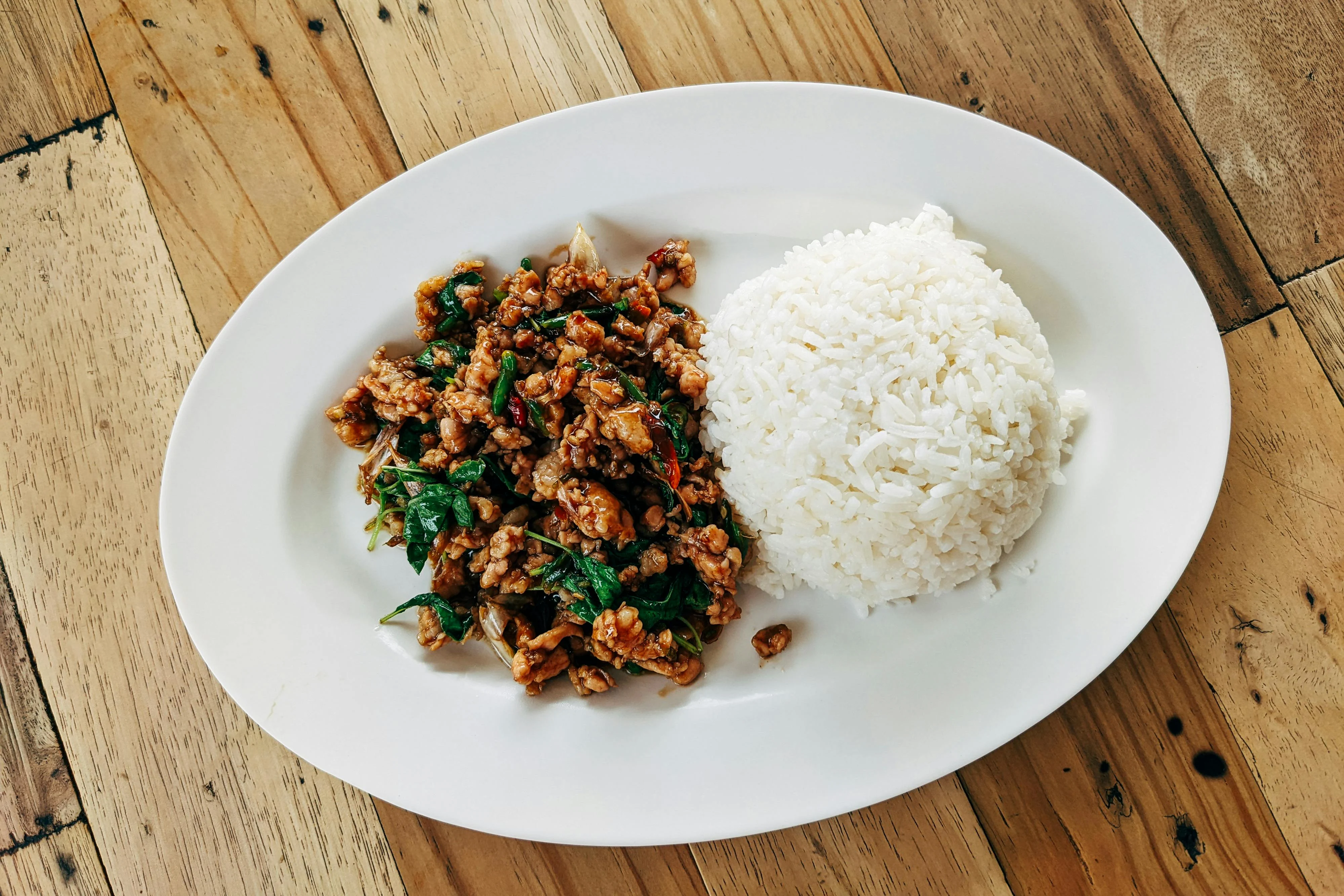
Pad krapow: Thai basil stir-fry with minced pork or chicken, a fried egg on top, and rice. 60 to 80 baht at any local restaurant. The version with crispy pork belly instead of minced meat appears on some menus and is worth the extra 20 baht.
Boat noodles: A small, intense bowl of noodle soup with pork or beef, blood tofu, and a dark pork-bone broth. 40 to 60 baht at Chatchai Market. Two or three bowls makes a proper breakfast.
Mango sticky rice: Eat it at Tamarind Market where the Mahachanok mangoes are fresh and the coconut cream is made that day. The night market versions are fine. The Tamarind version is noticeably better.
Practical Notes
Most market stalls accept cash only. Bring small bills. A 1,000-baht note at a 60-baht noodle stall creates an awkward moment.
The best food window at the night market is 6pm to 8pm on weekdays and 5:30pm to 7pm on weekends. After 8pm on weekends the best tables are taken and the hoi tod stalls are out of fresh oysters.
Chatchai Market is the only food destination in Hua Hin that rewards early arrival. Everything else opens in the evening. Chatchai is done by noon and the best produce is gone by 8am.
The food courts inside Bluport and Market Village shopping malls are the practical answer for a hot afternoon when you want air conditioning, a proper table, and a bowl of noodles for 60 baht. Neither is worth a dedicated visit but both are useful to know about.
Where to Go from Here
For where to stay while eating your way through Hua Hin: Best Hotels in Hua Hin 2026.
For the beach between meals: Hua Hin Beach Guide.
For day trips that include stopping at Prachuap Khiri Khan for seafood lunch: Best Day Trips from Hua Hin.
For the full Hua Hin destination overview: Hua Hin Travel Guide 2026.